Ralph Lauren Case Study
Brand Audit
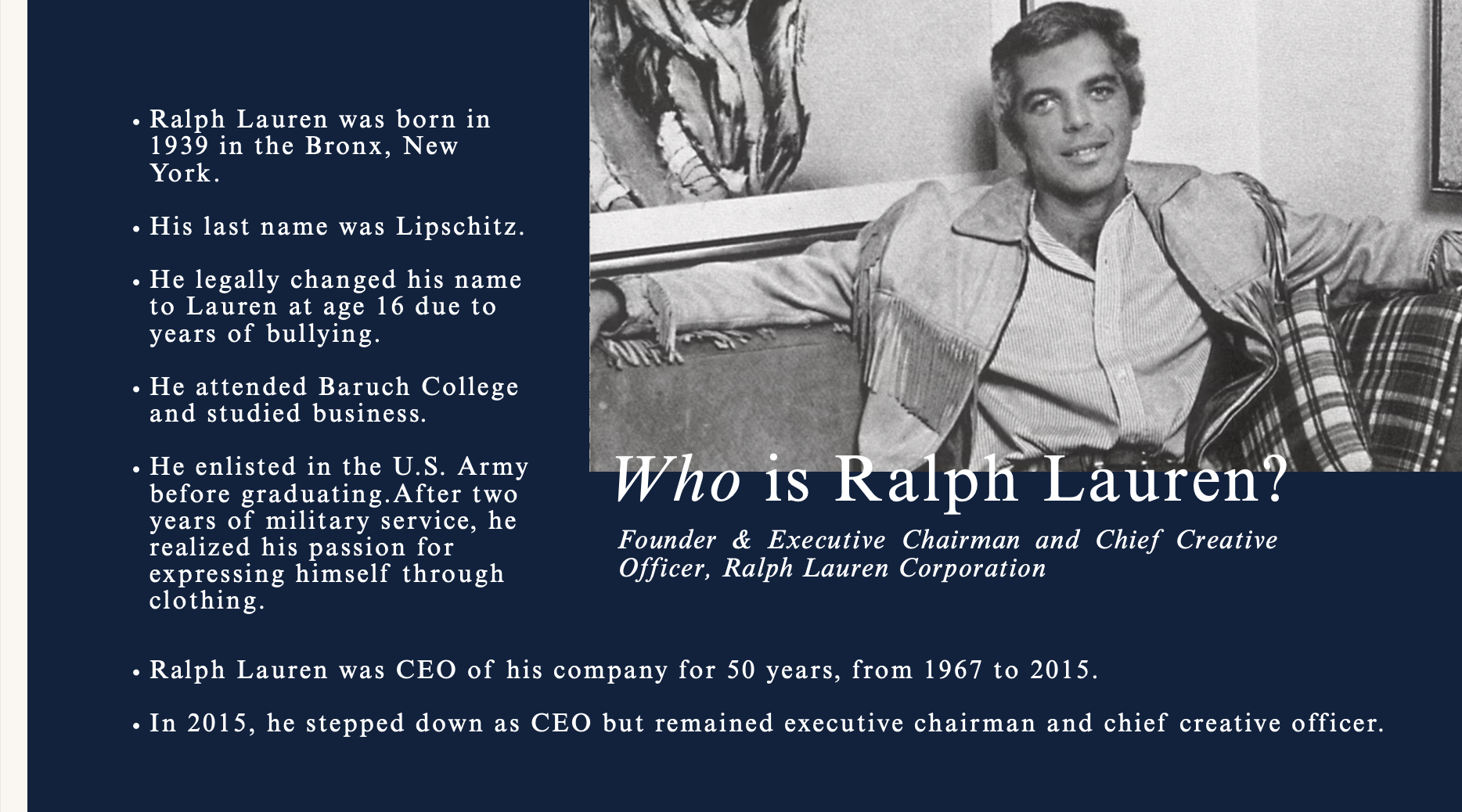
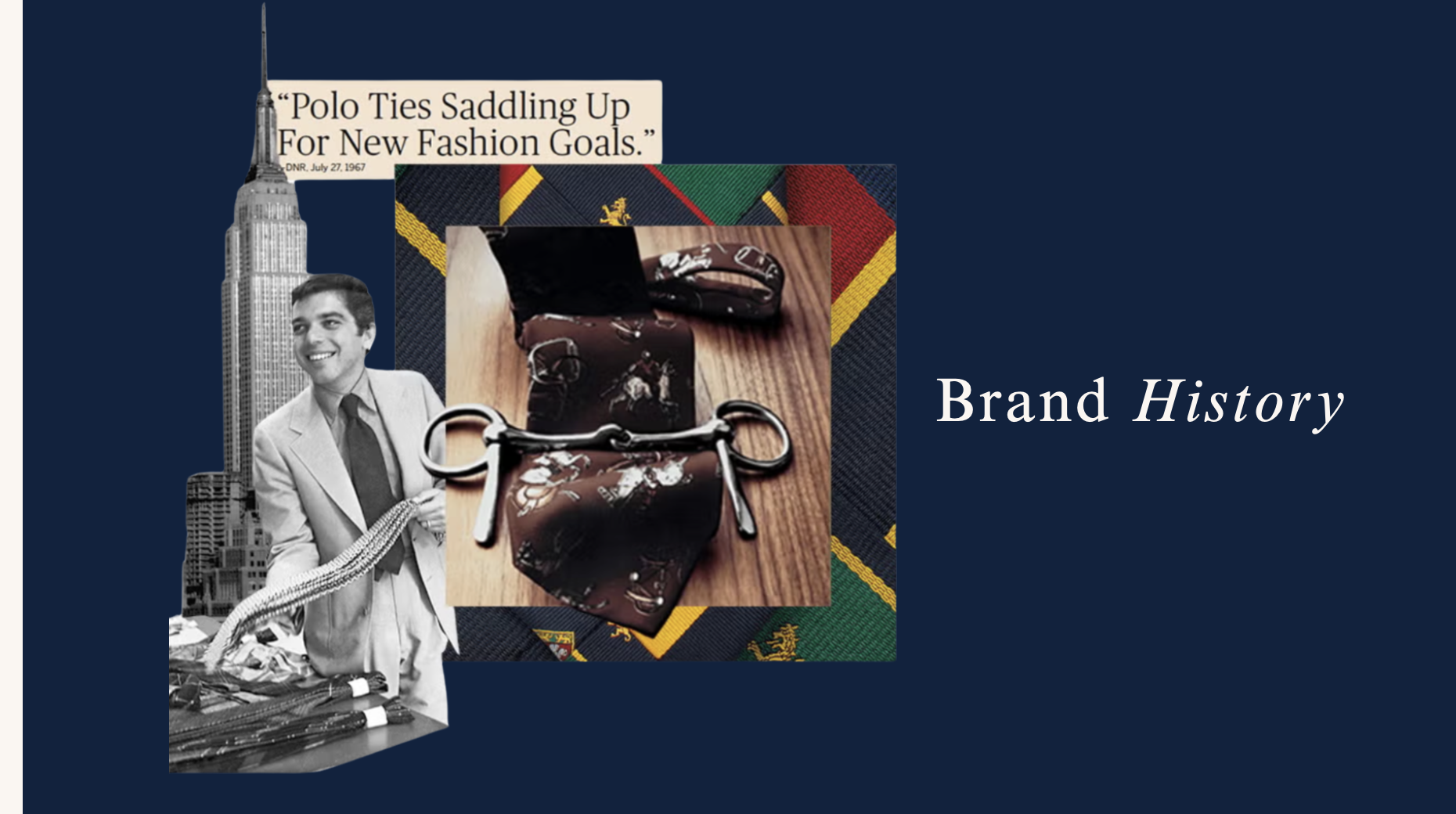
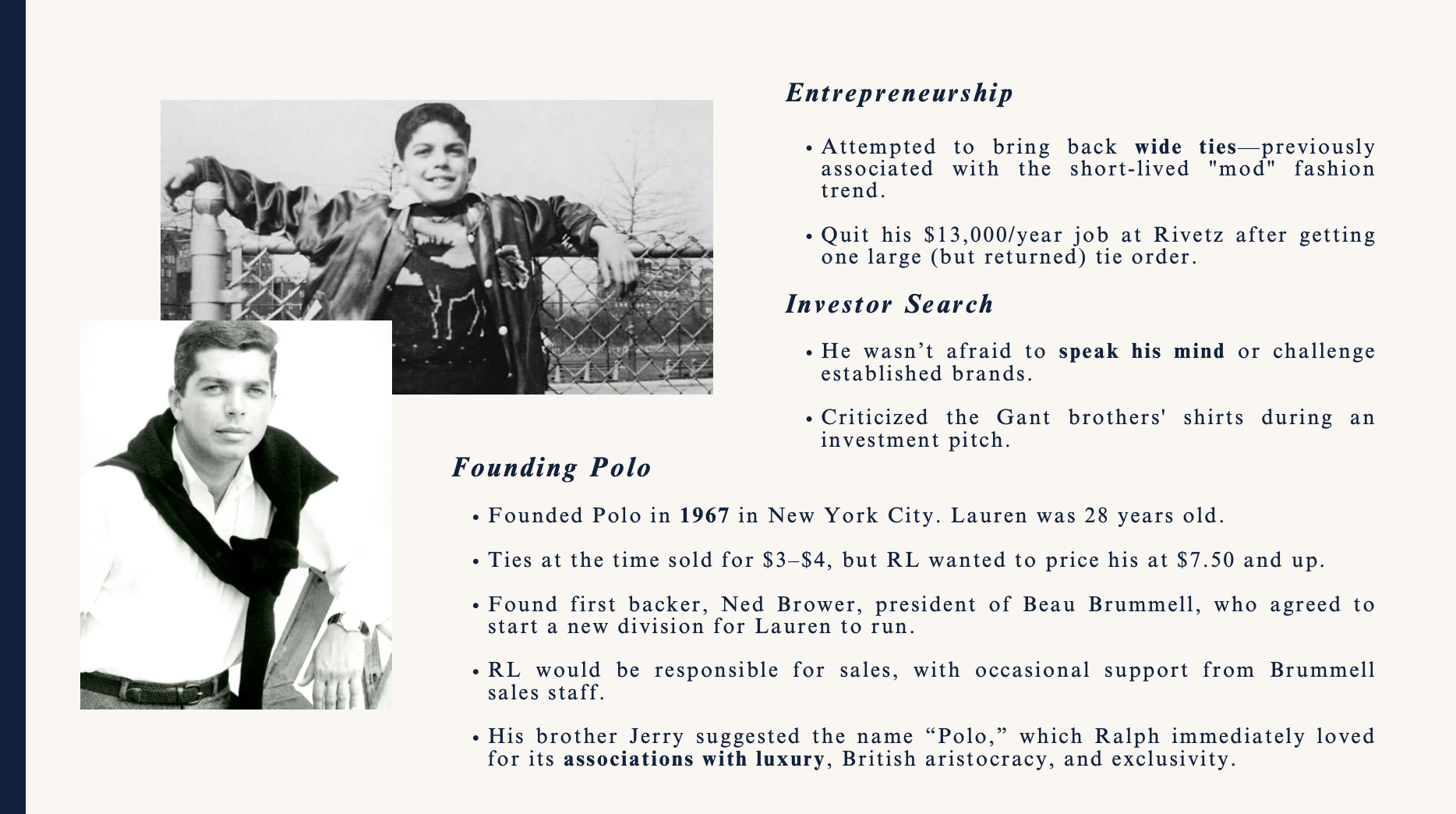
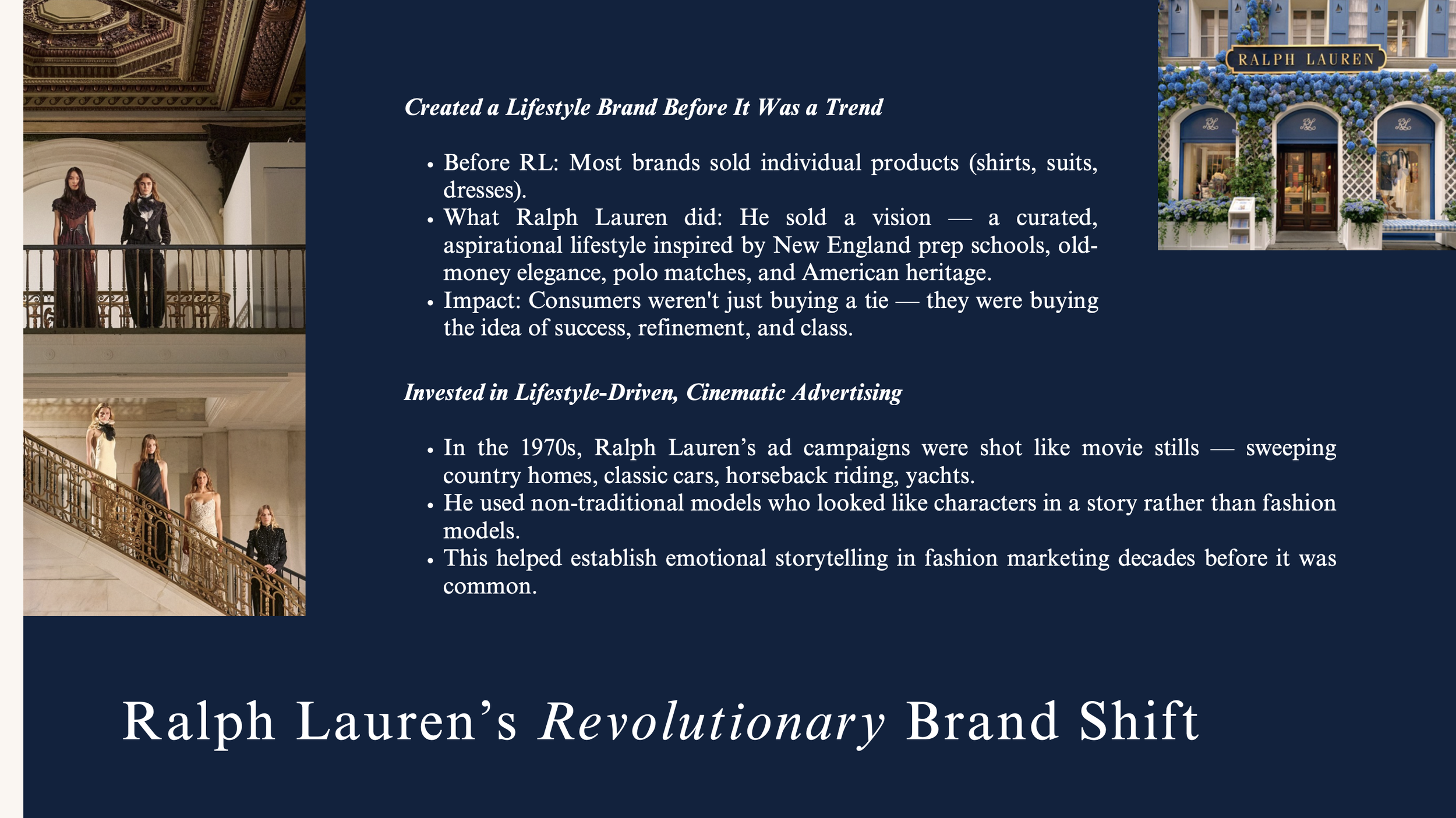
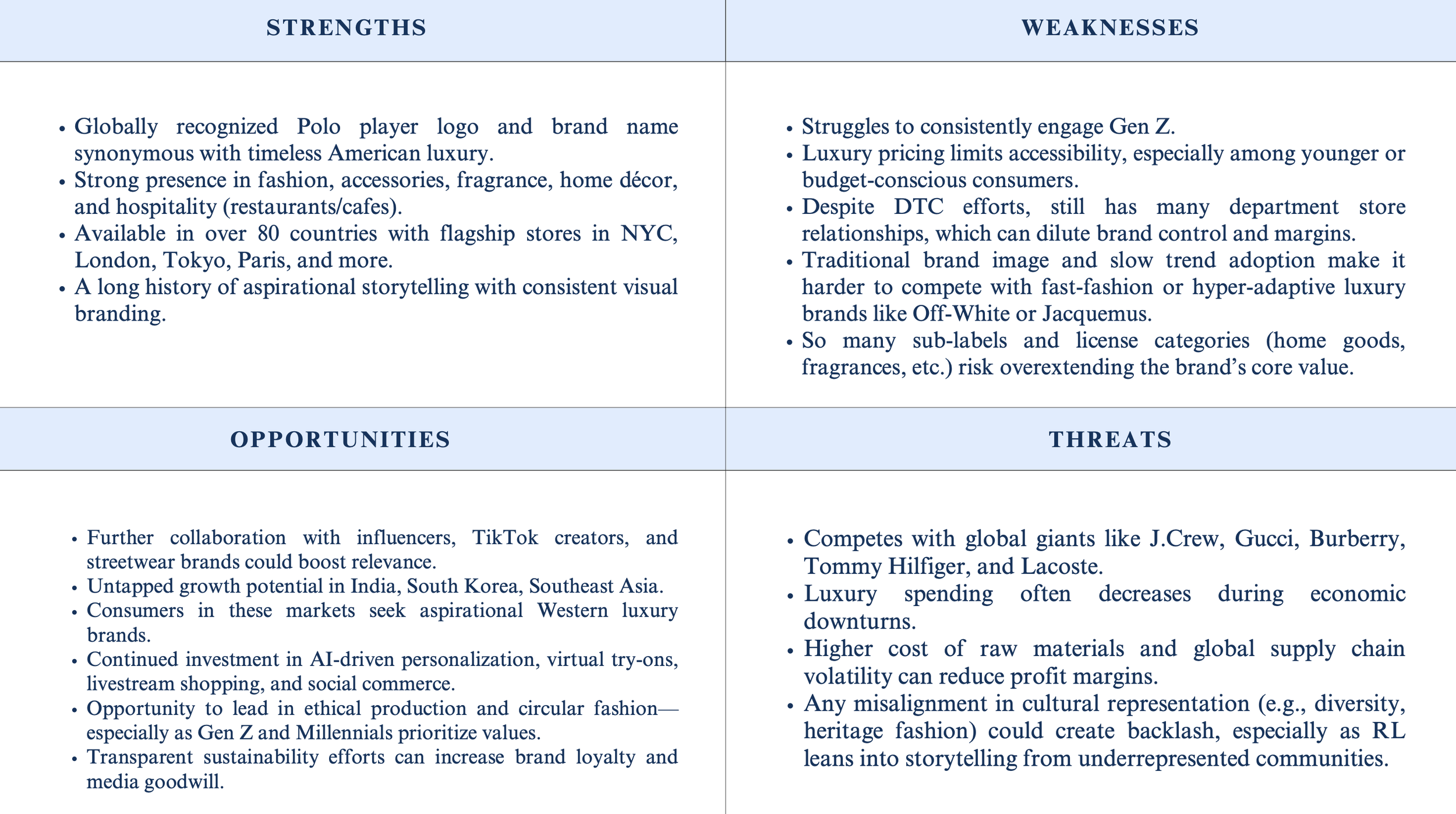
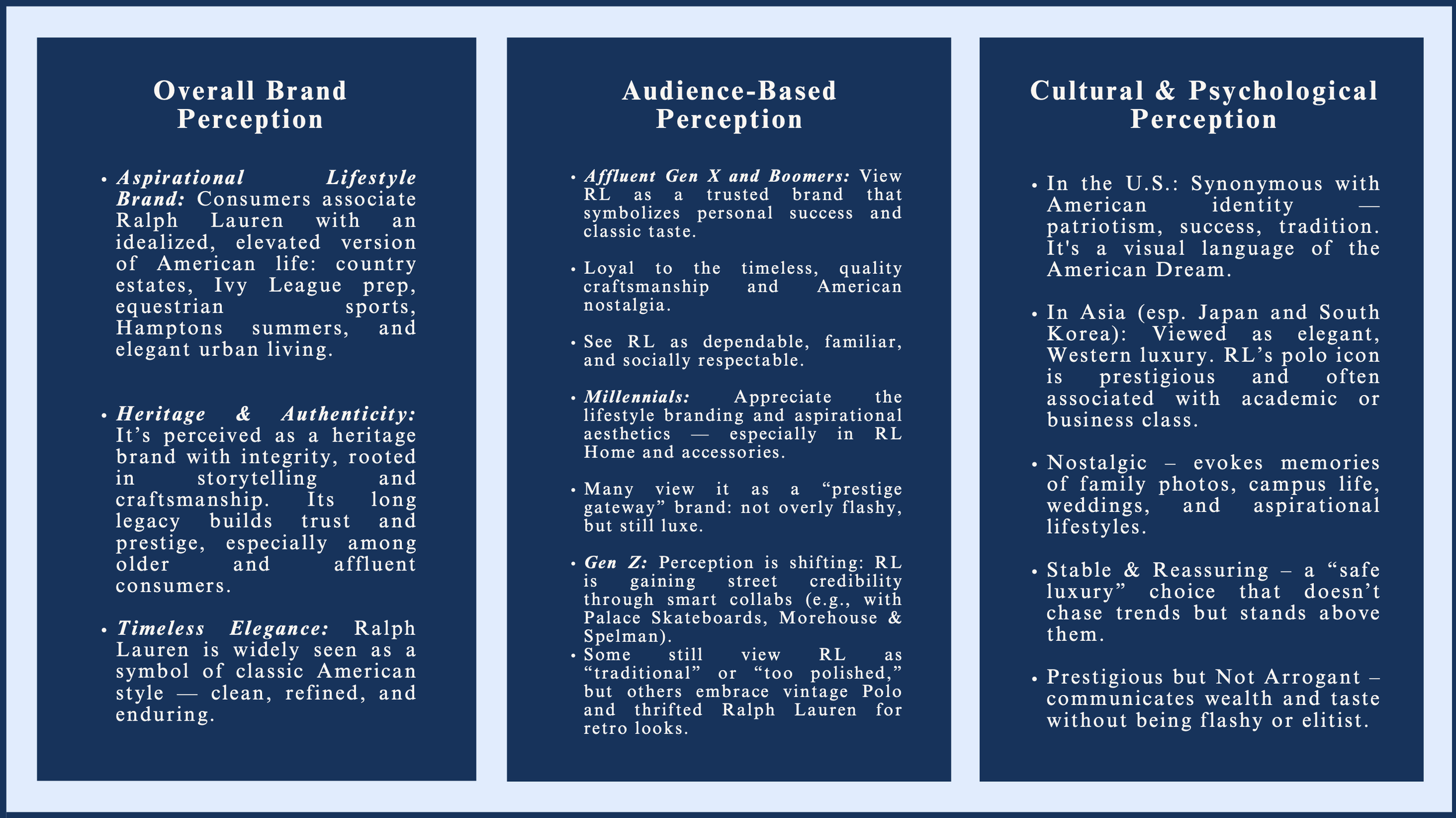
In SMU's graduate-level course, ADV 6365: Marketing Communications Management, taught by Professor Hilary Russell-Bremer, I selected Ralph Lauren as my brand for the semester's final project. Ralph Lauren, founded in 1967 in New York City, is one of America's most iconic and enduring lifestyle brands, built from a single line of wide neckties into a global empire spanning fashion, fragrance, home furnishings, hospitality, and beyond. The brand's founder, born Ralph Lipschitz in the Bronx, built his company on a singular vision: selling not just clothing, but an aspirational version of the American dream rooted in heritage, elegance, and self-expression. Over the course of the project, I developed a comprehensive brand analysis covering the company's history, visual identity, consumer personas, competitive positioning, SWOT analysis, IMC strategy, and forward-looking marketing recommendations, treating Ralph Lauren as a real-world client navigating the tension between timeless prestige and evolving cultural relevance.
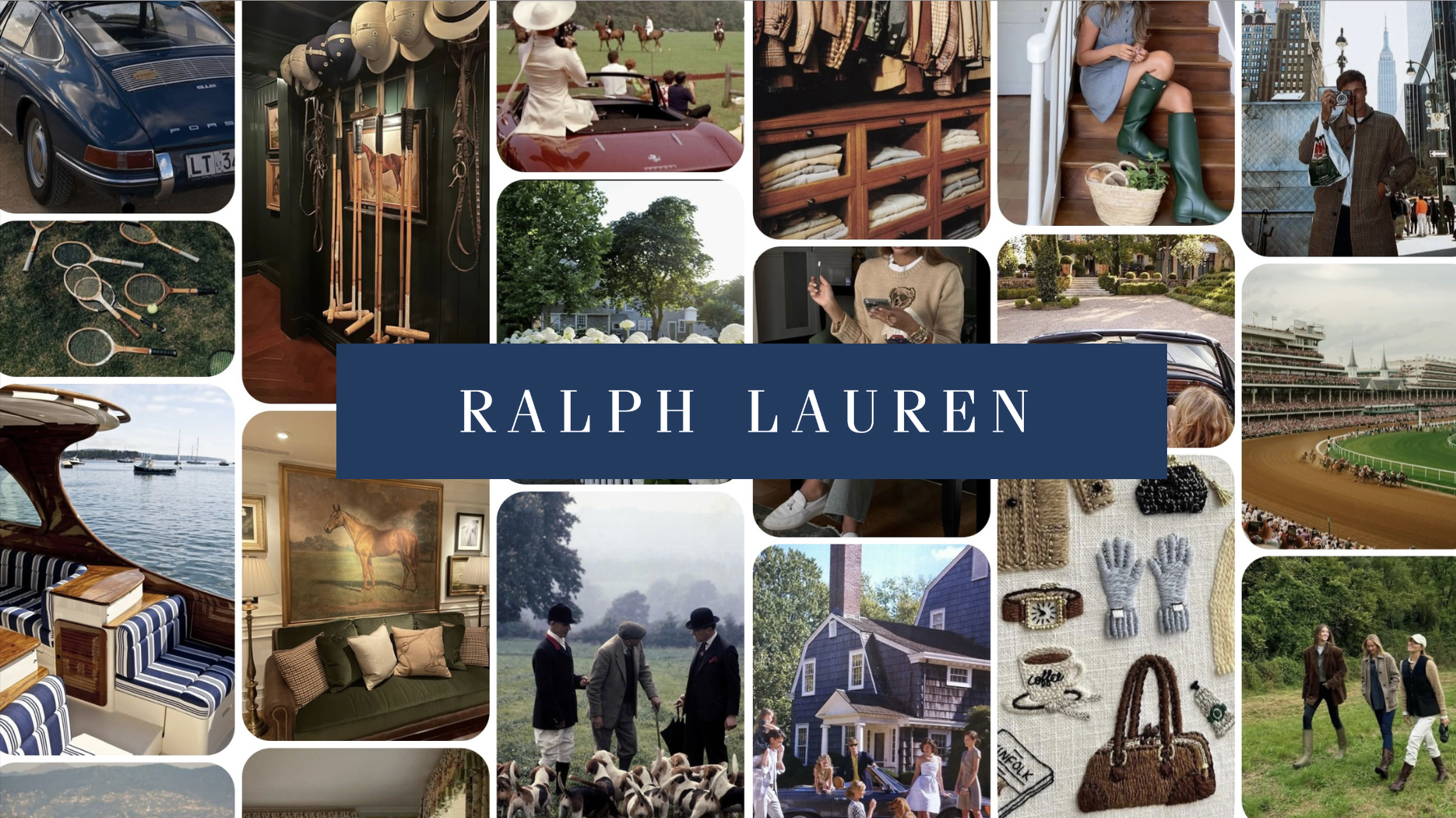
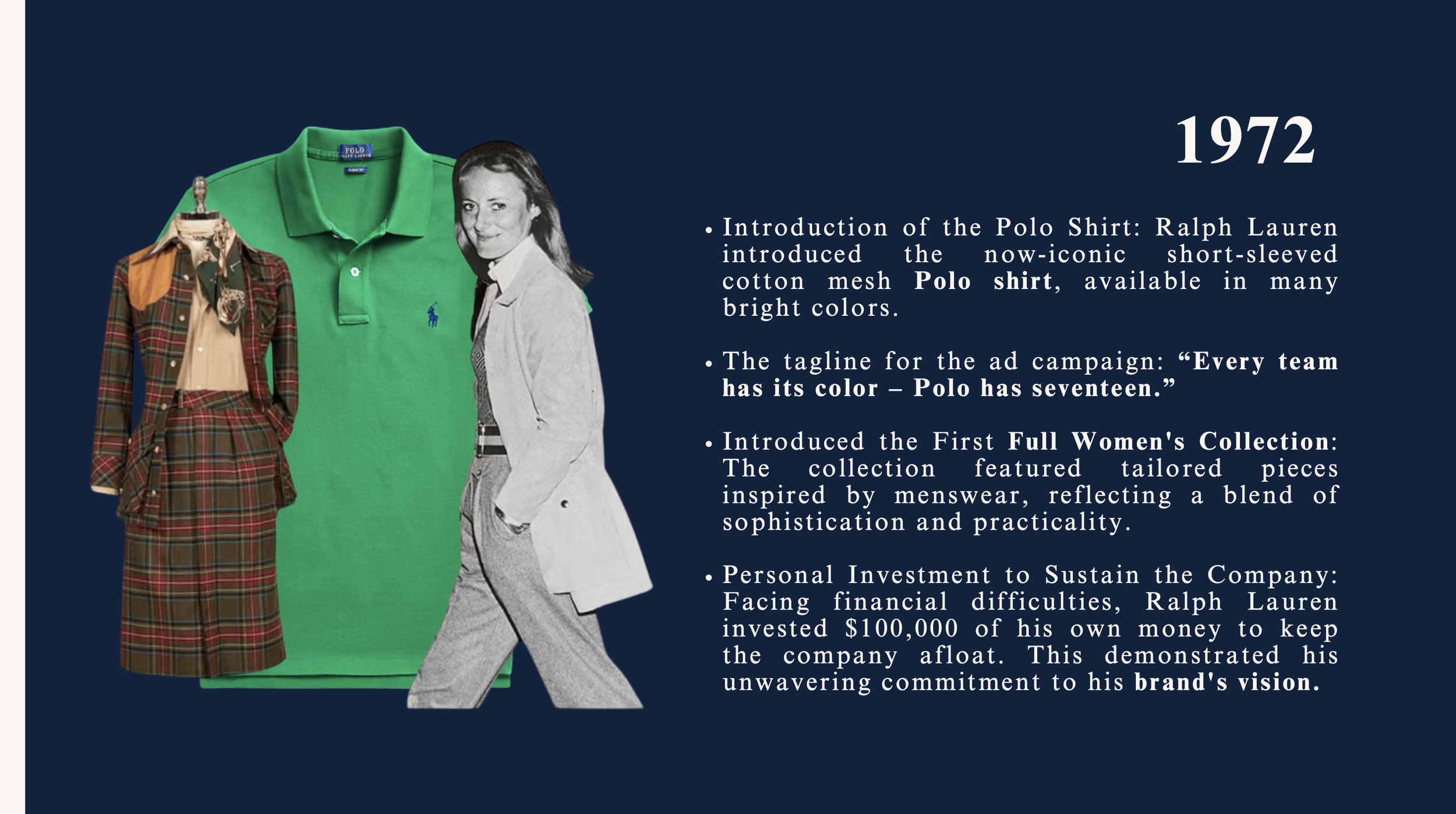
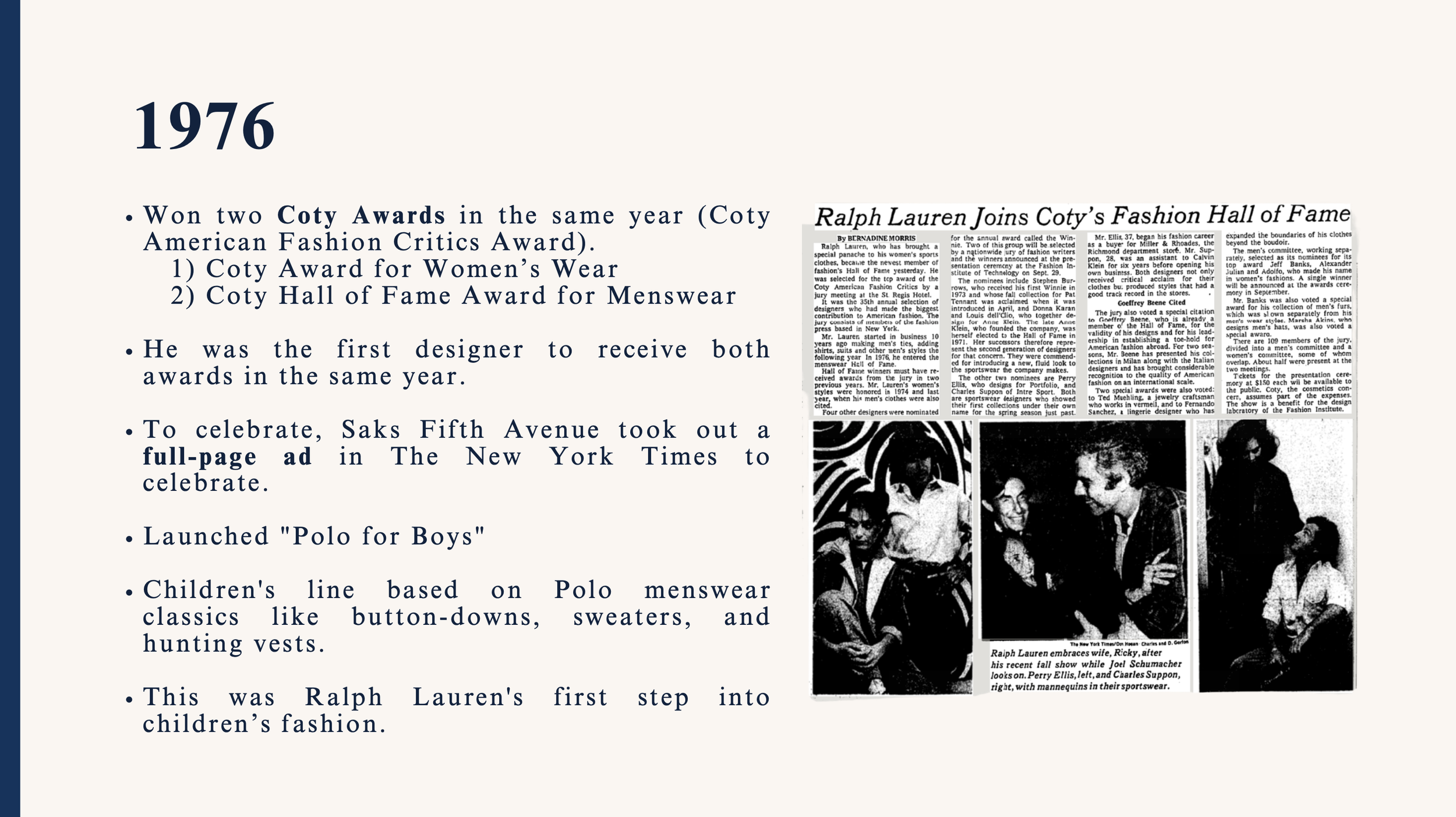
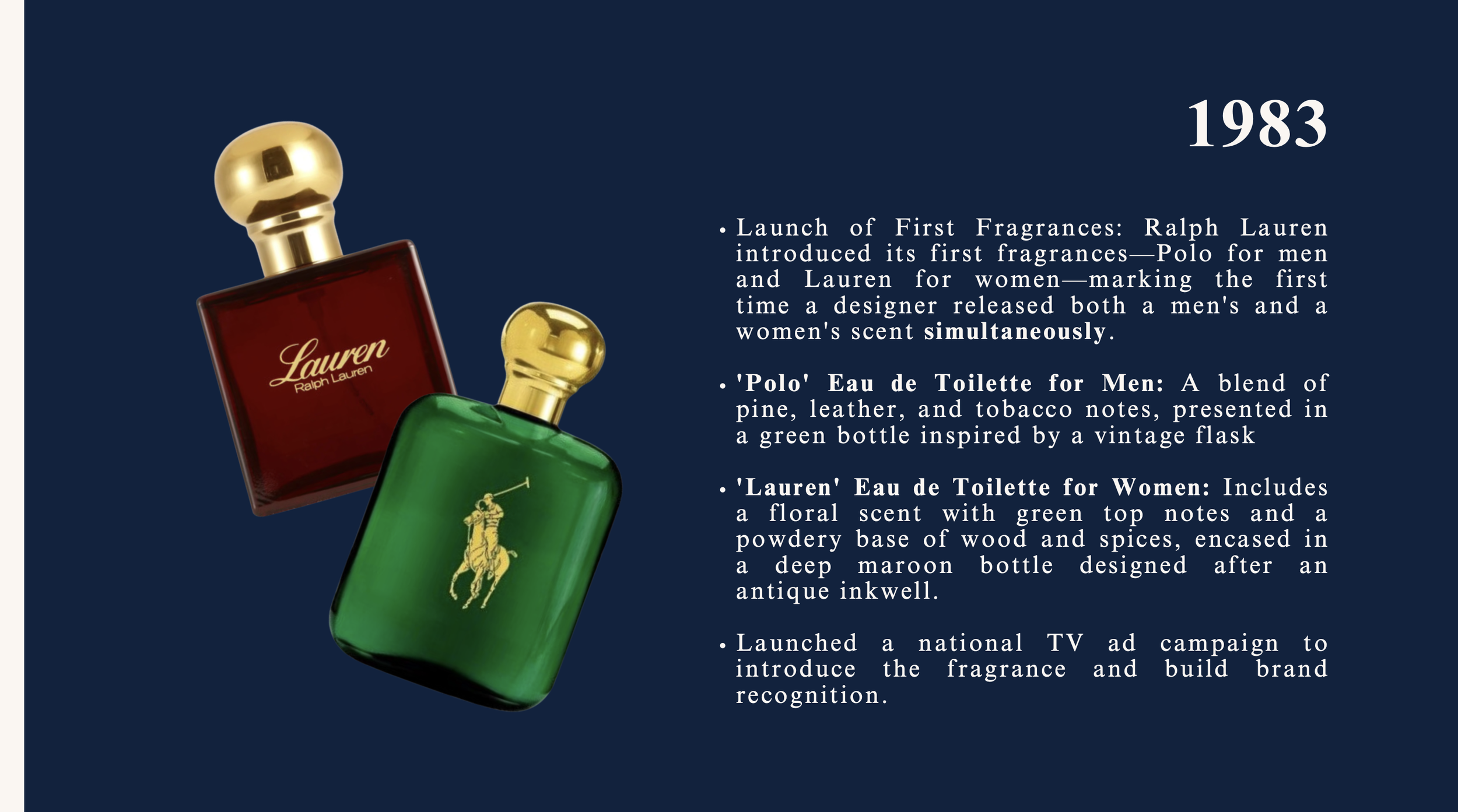
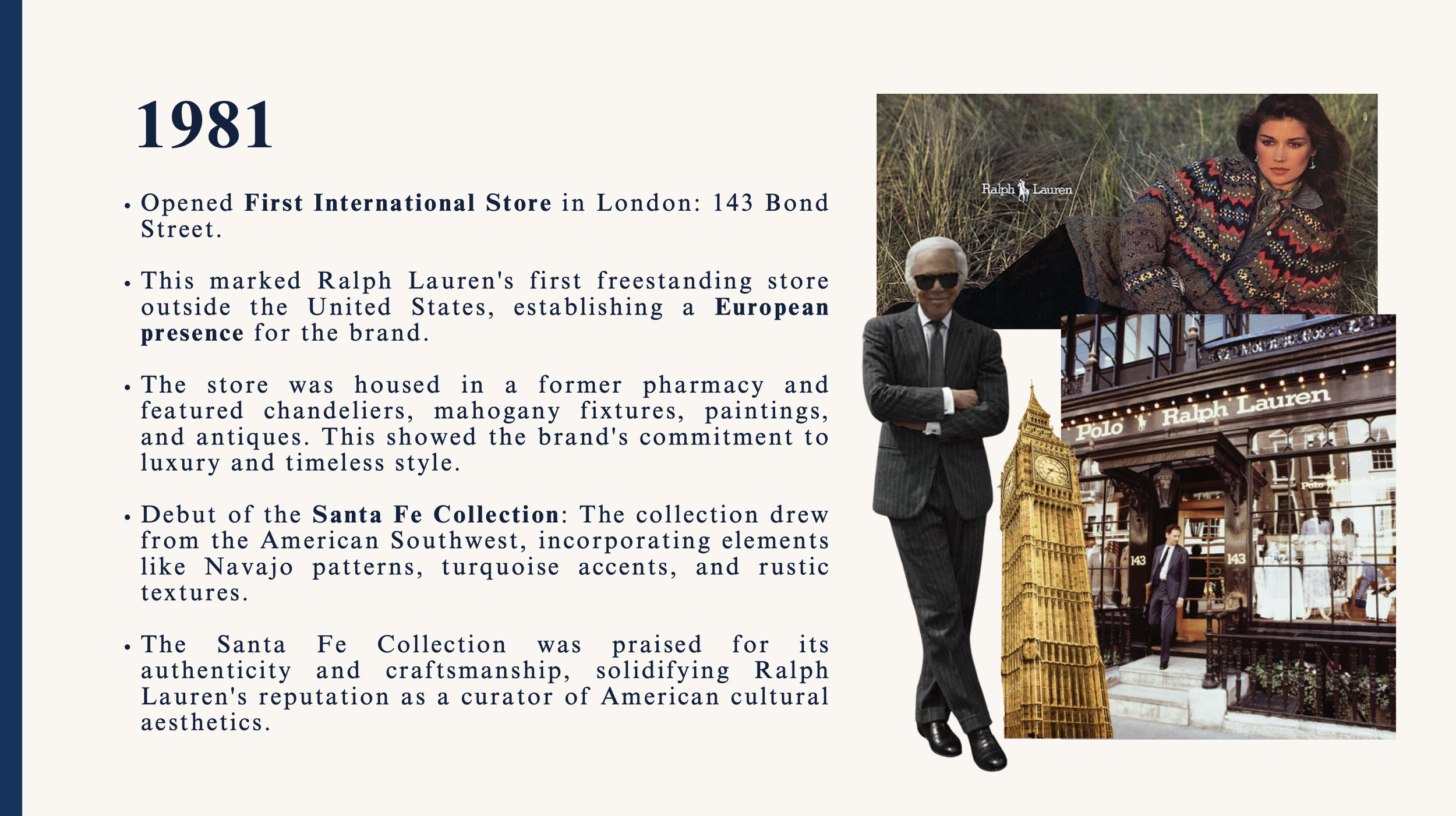
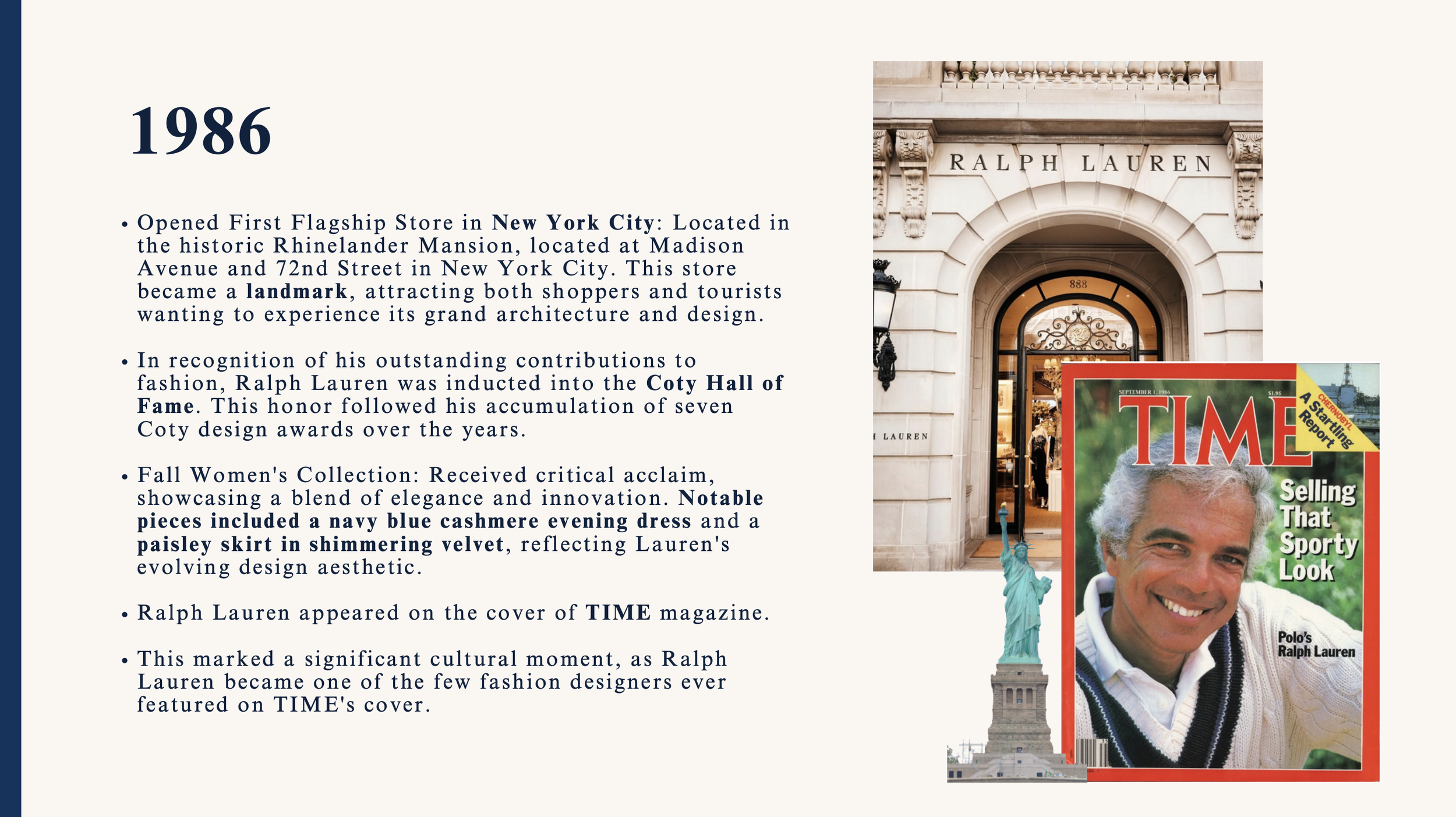
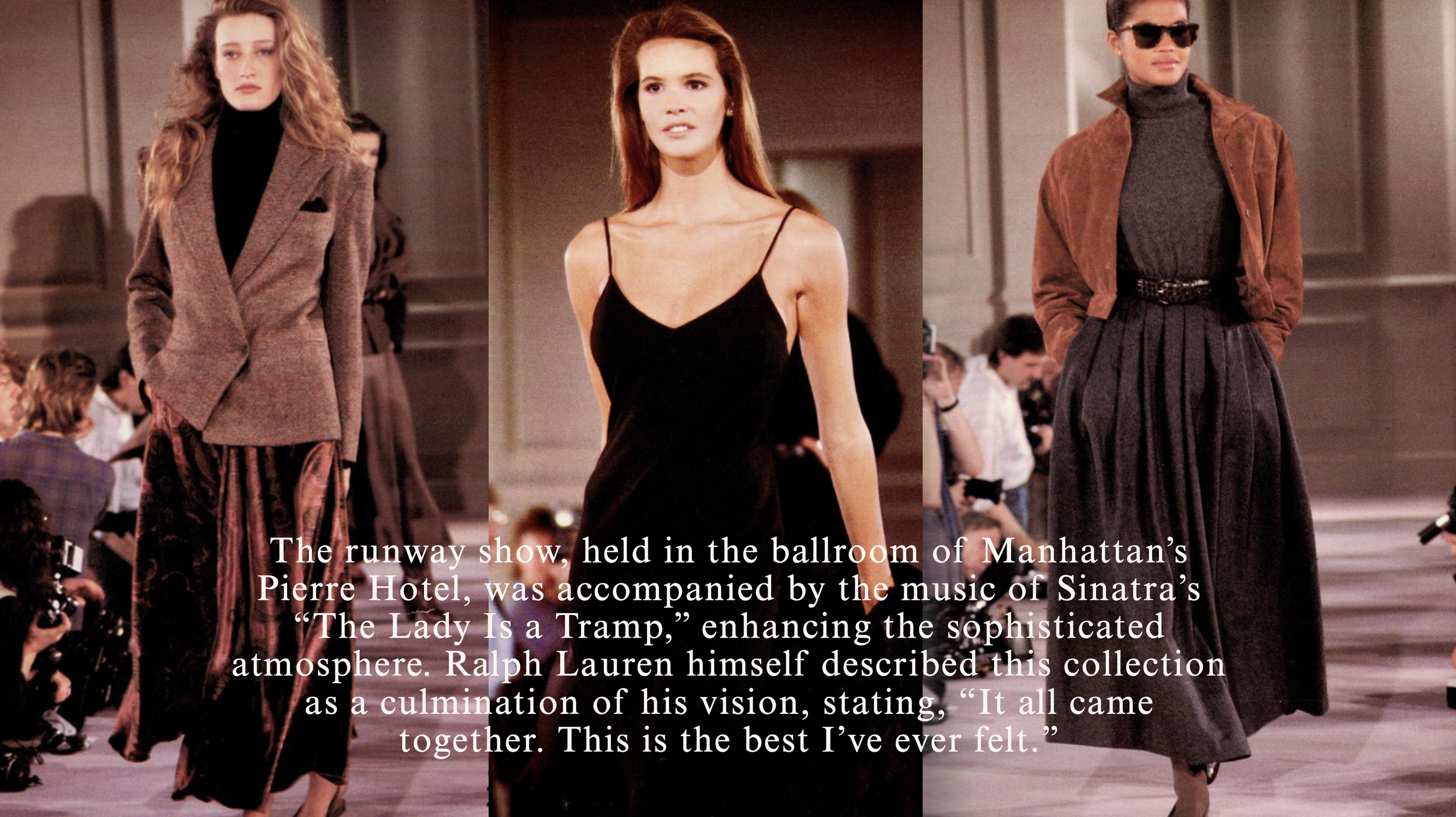
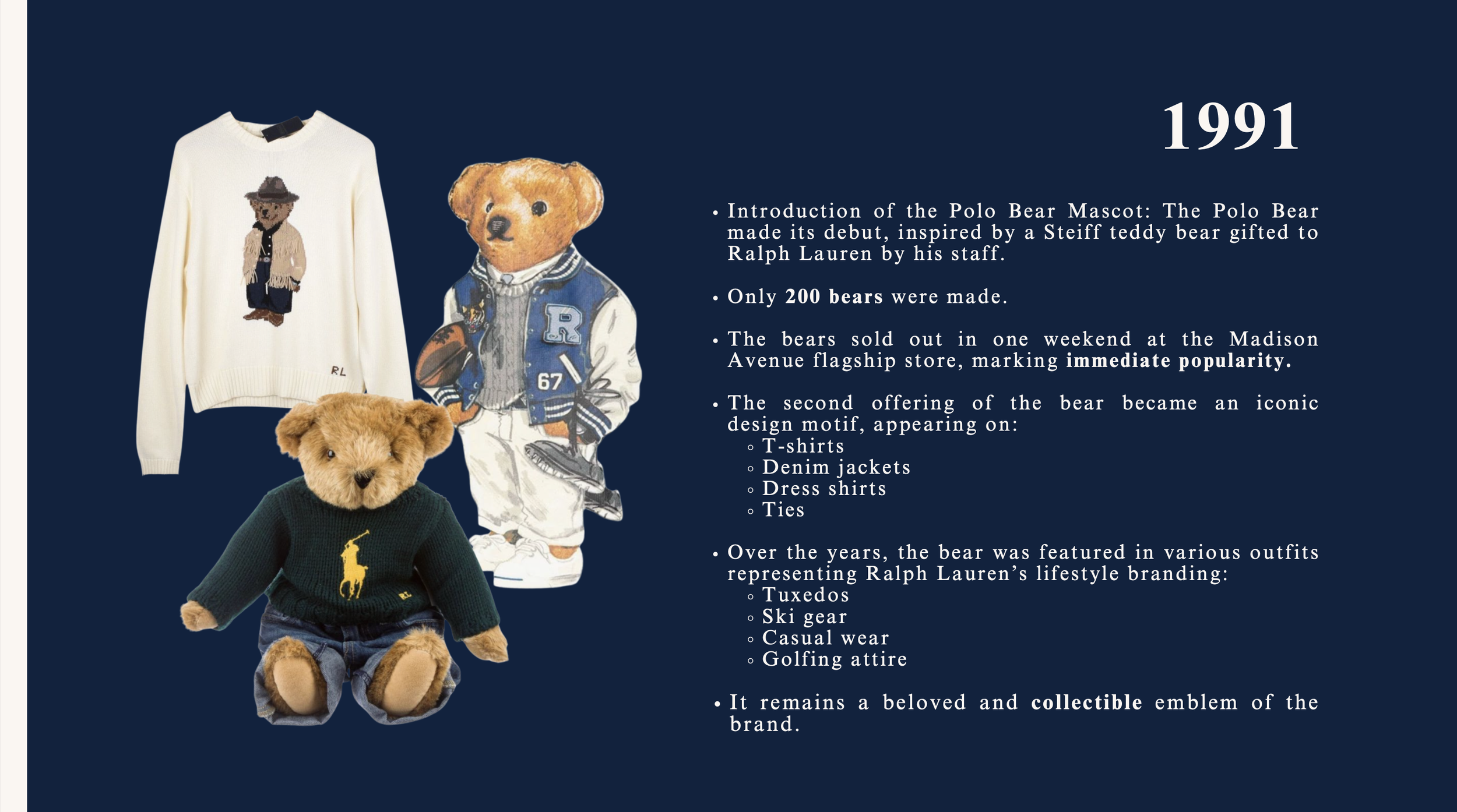
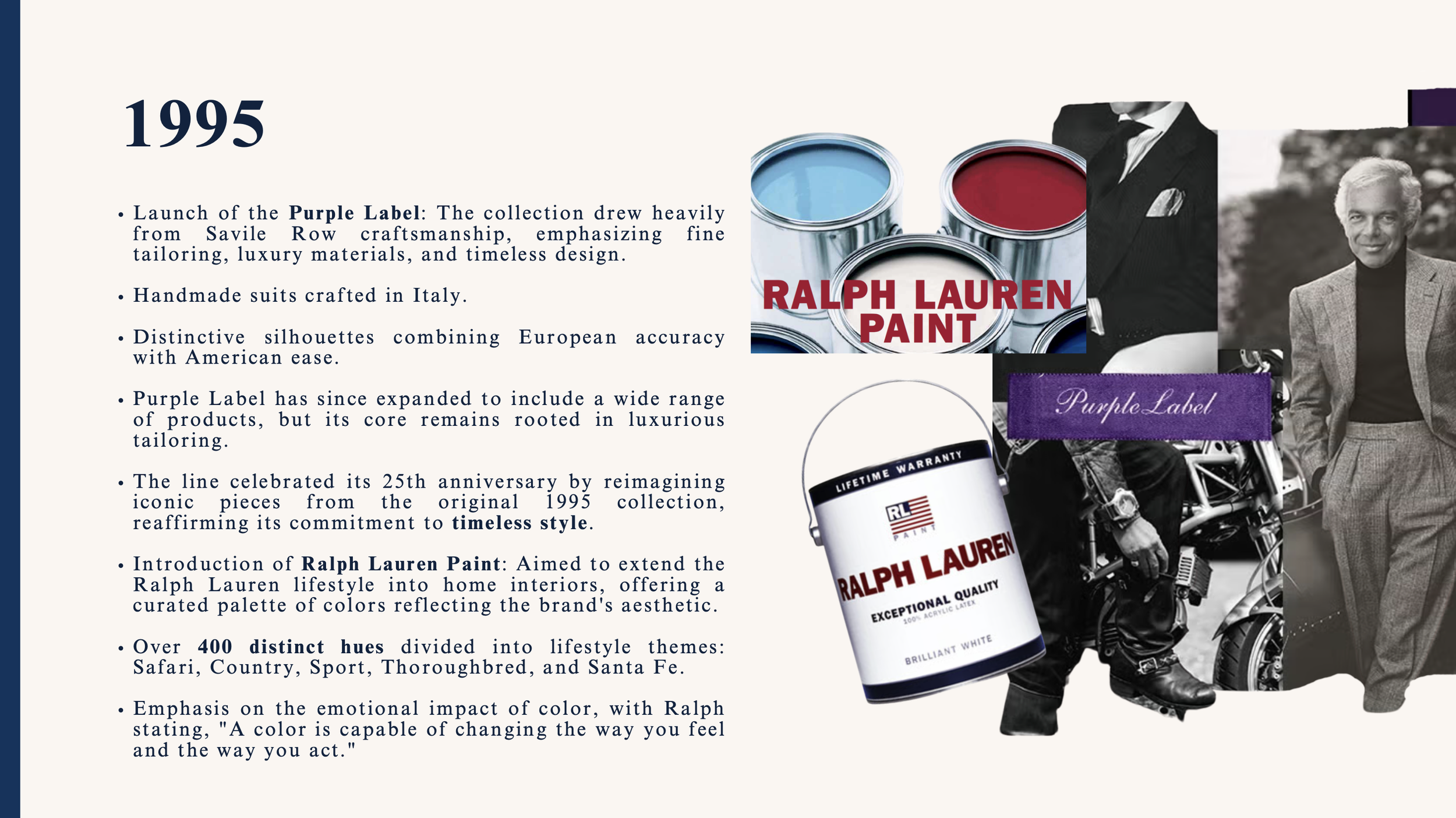
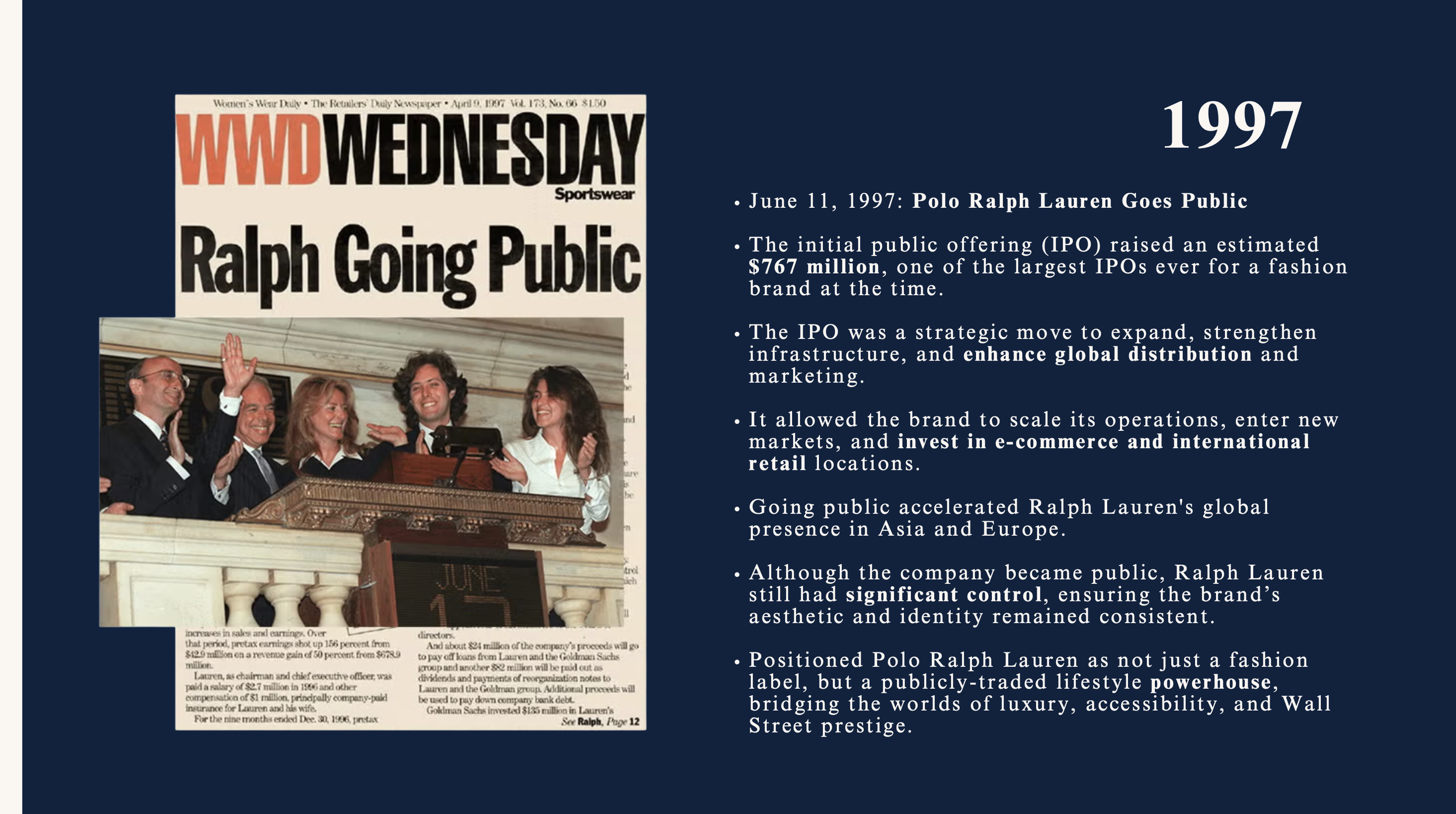
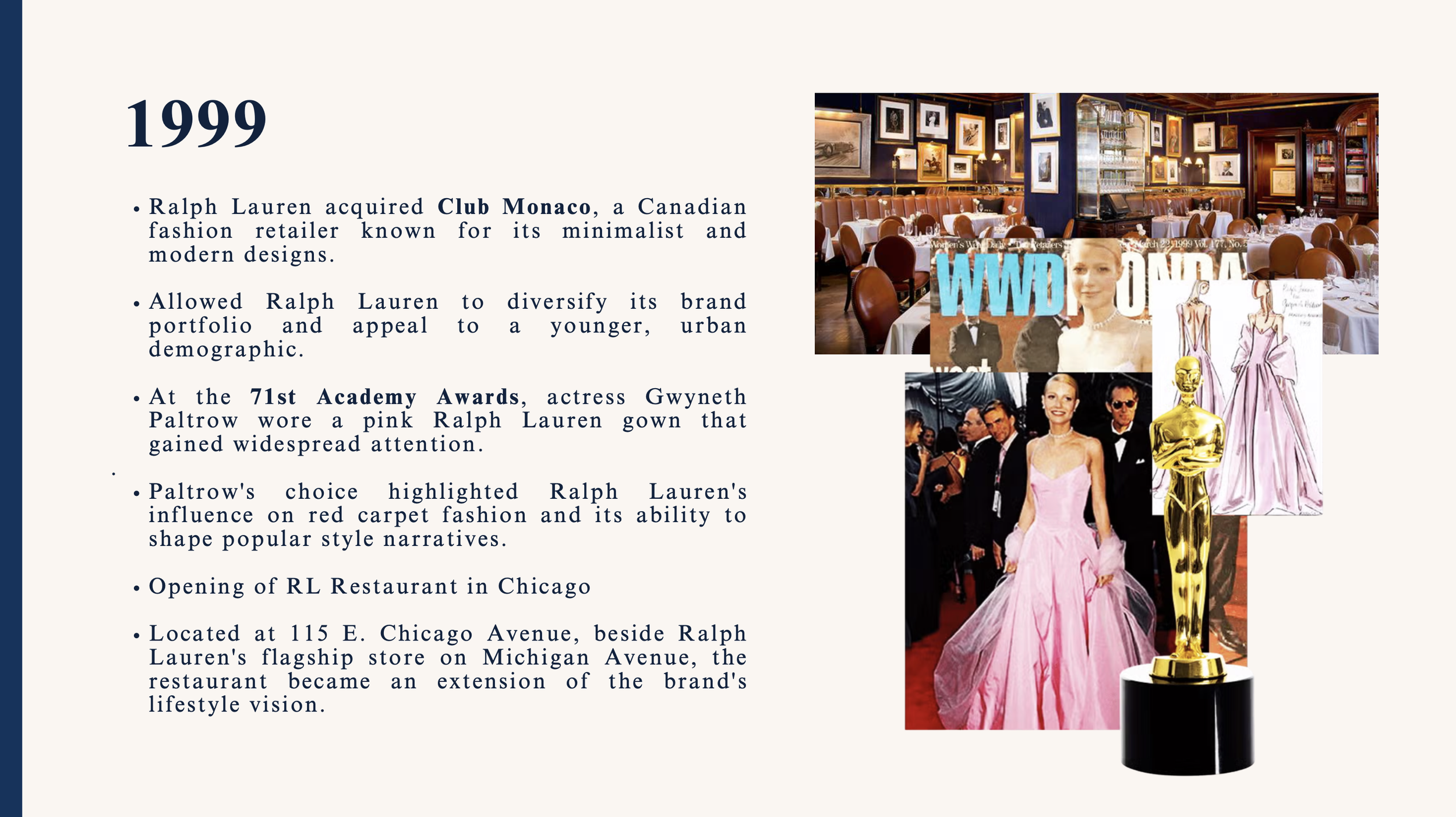
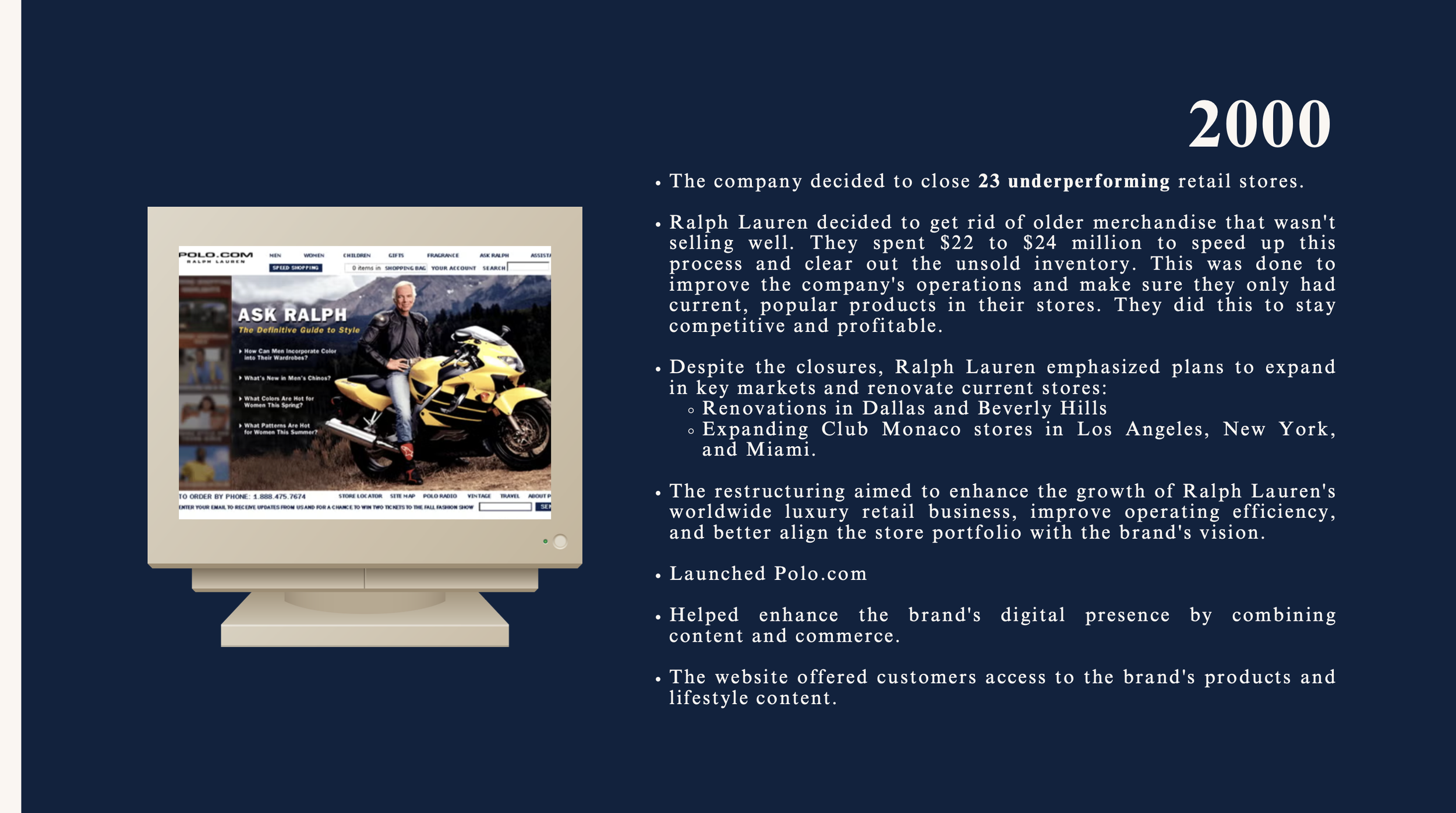
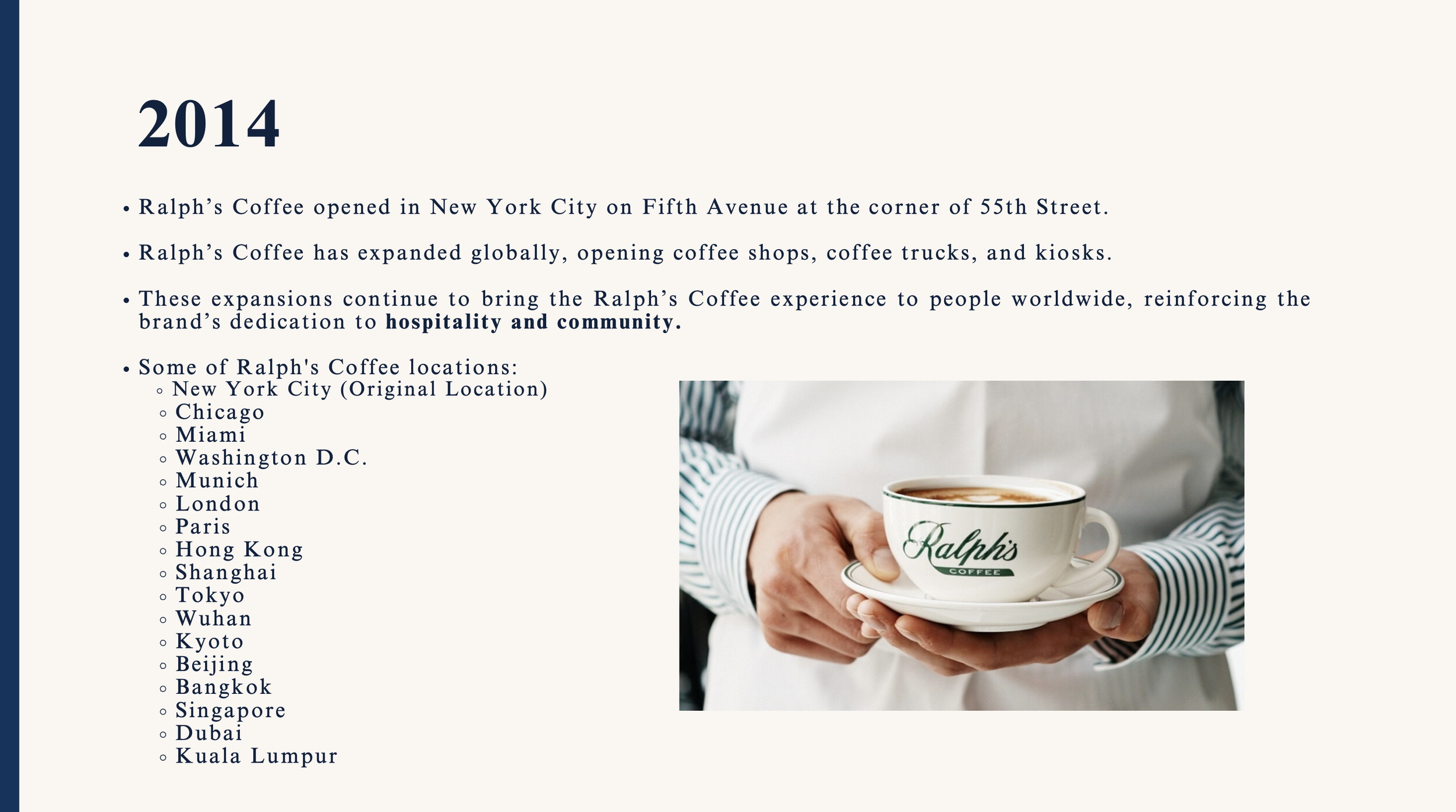
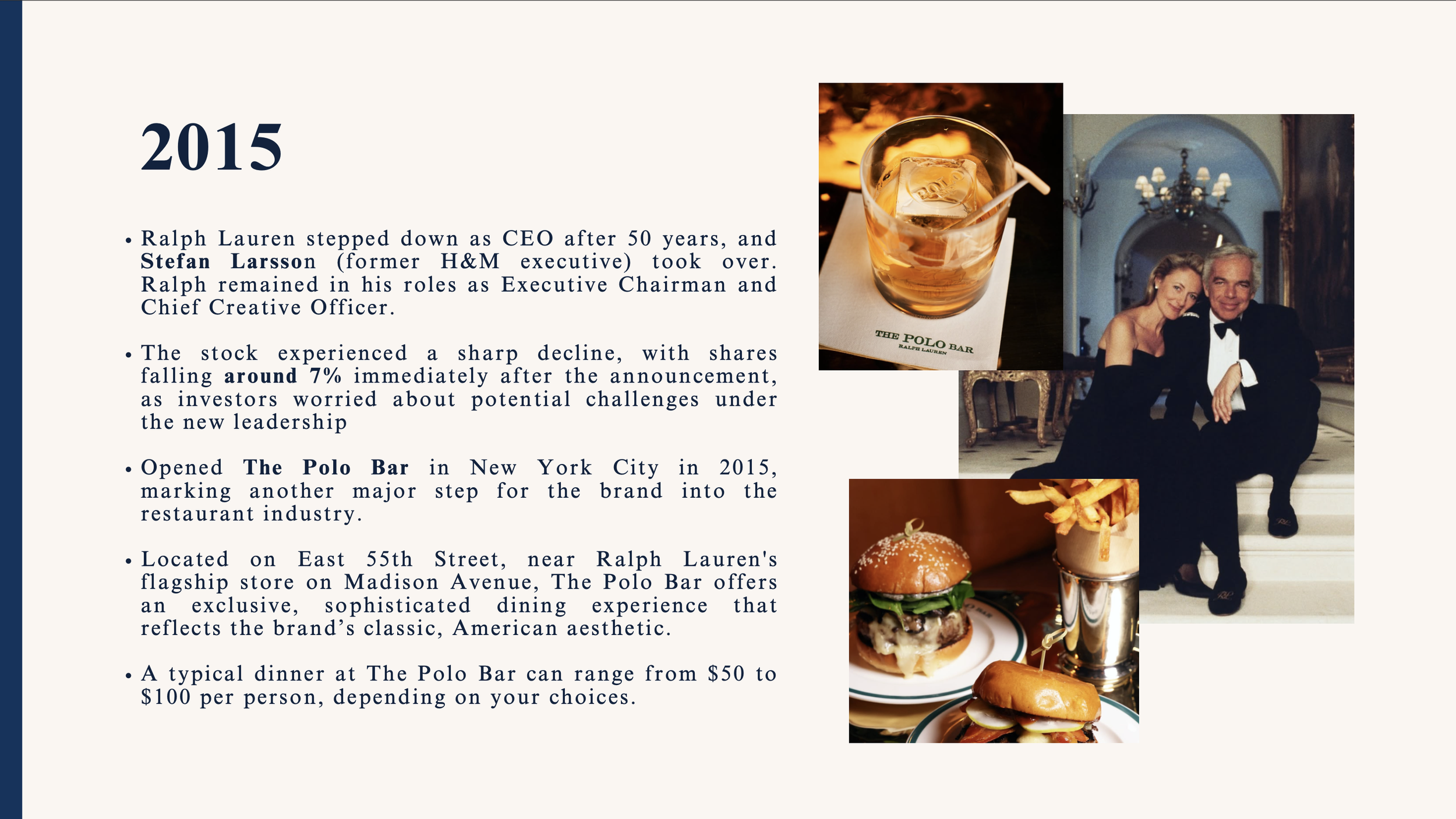
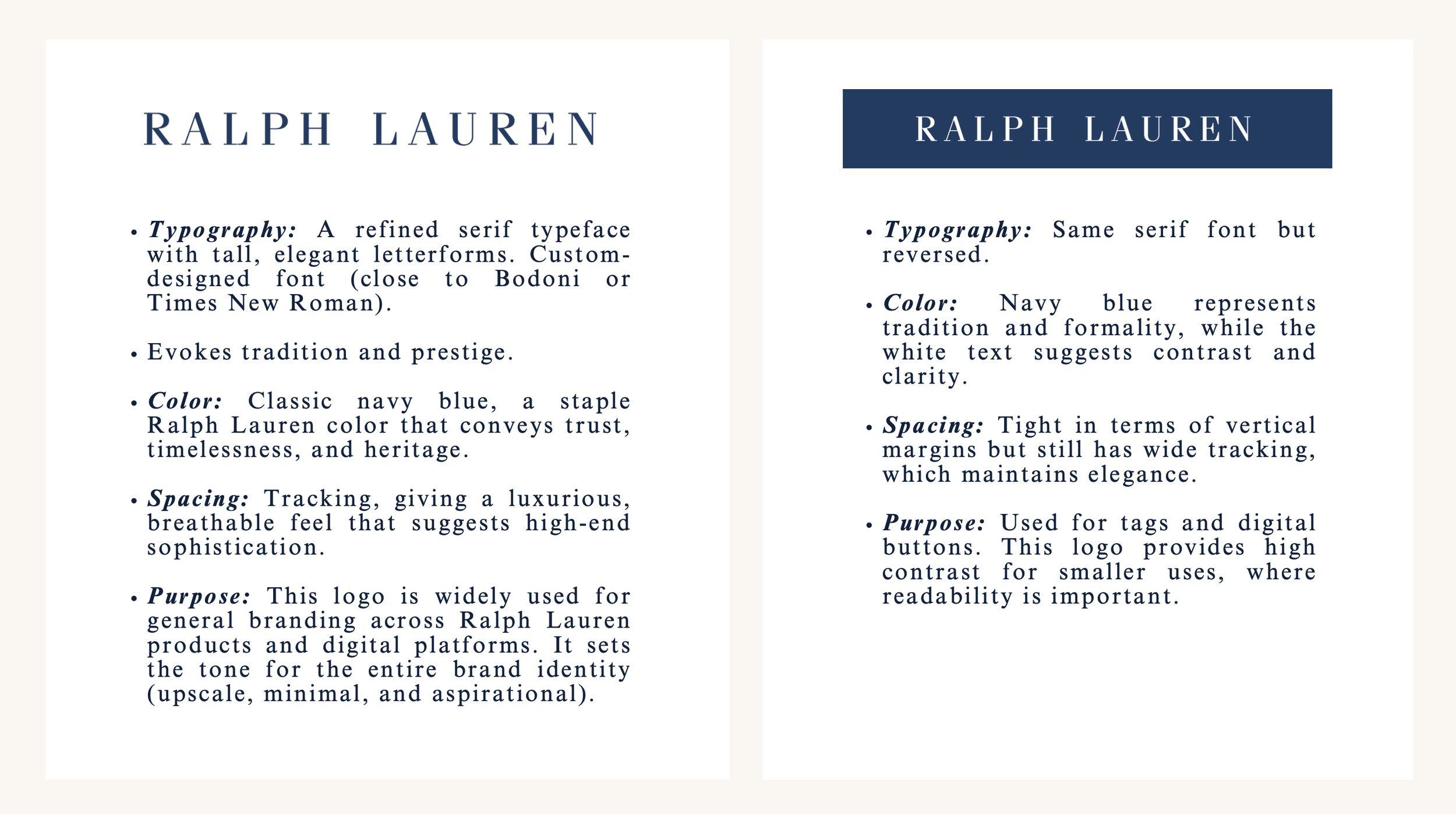
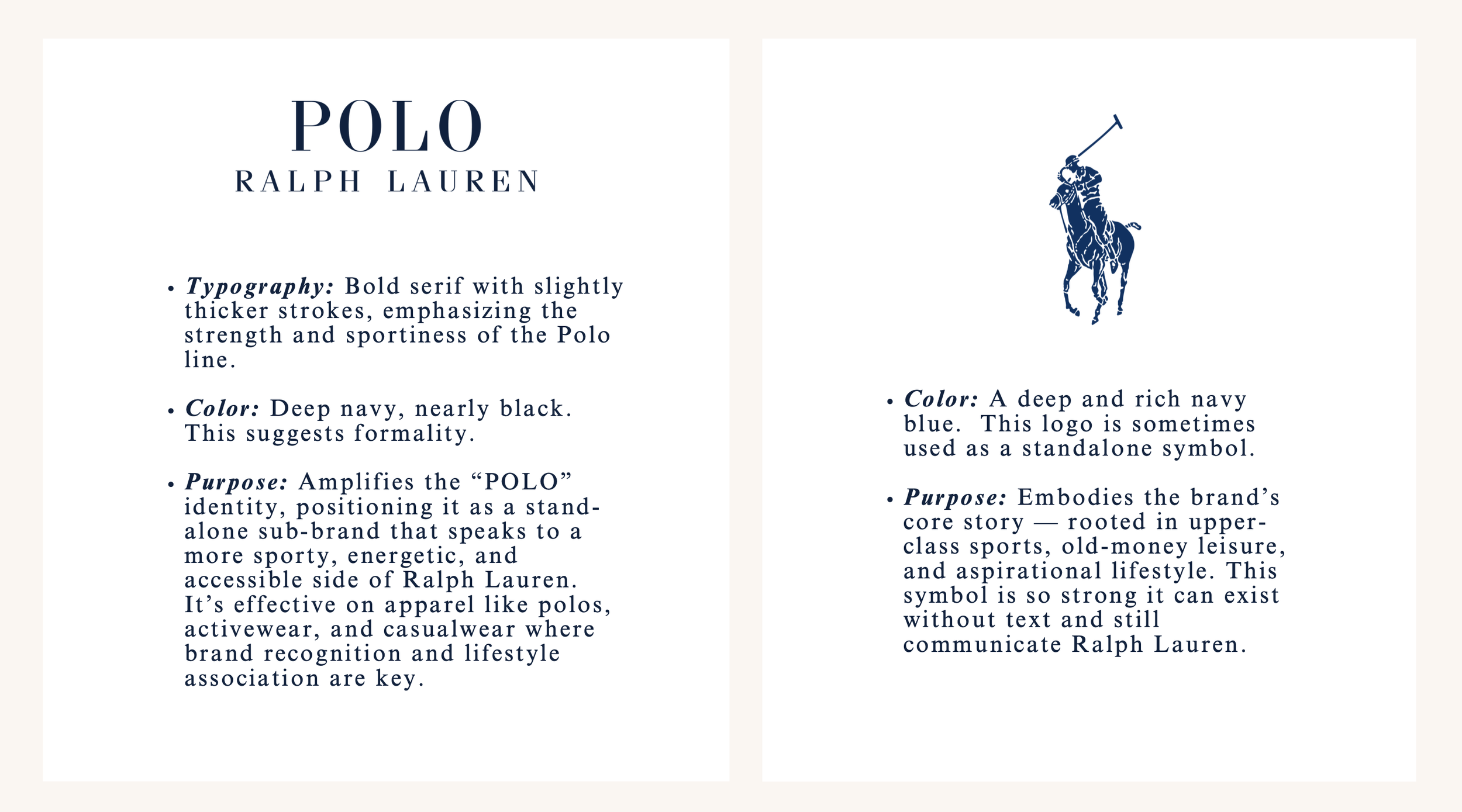
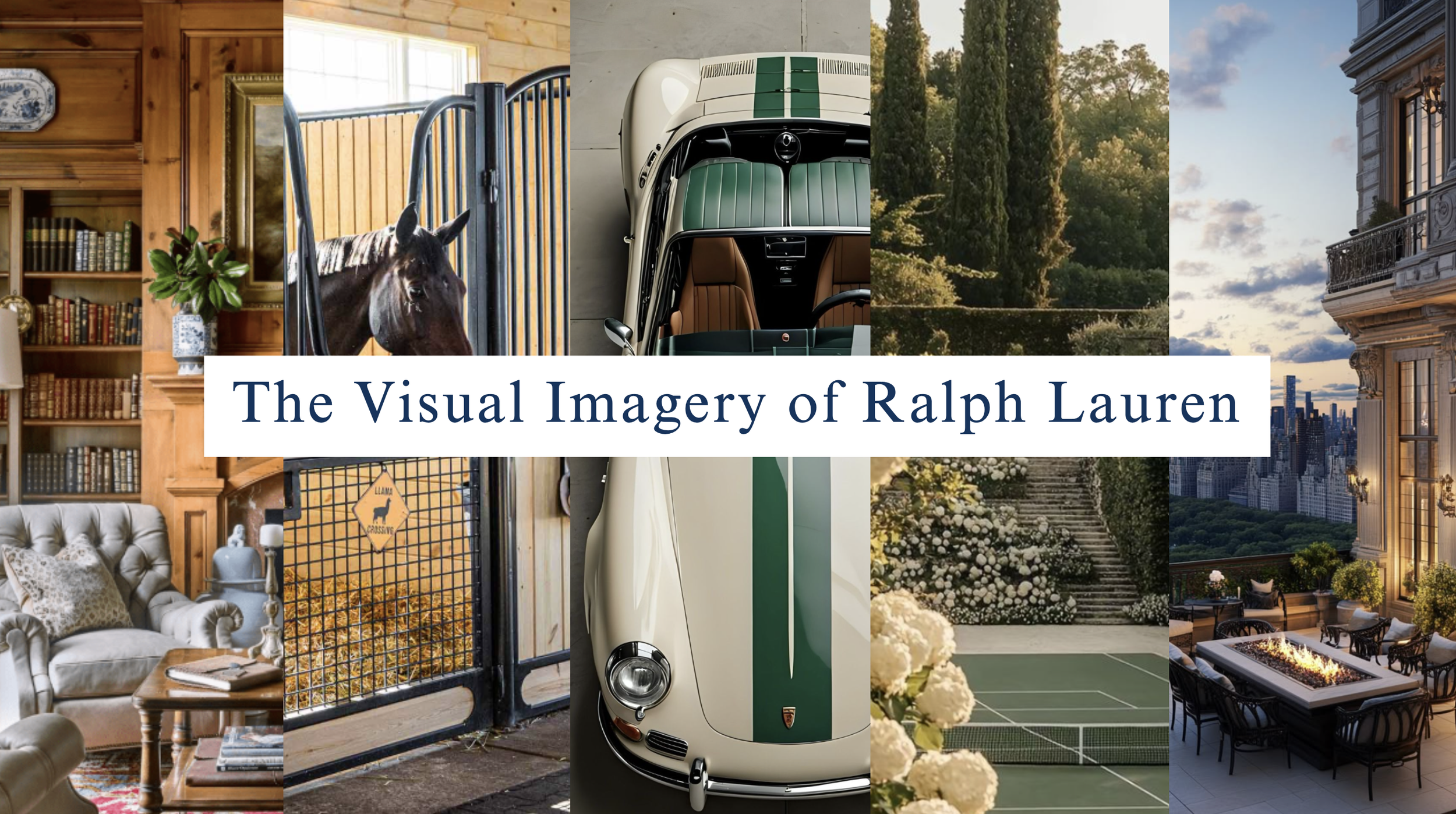
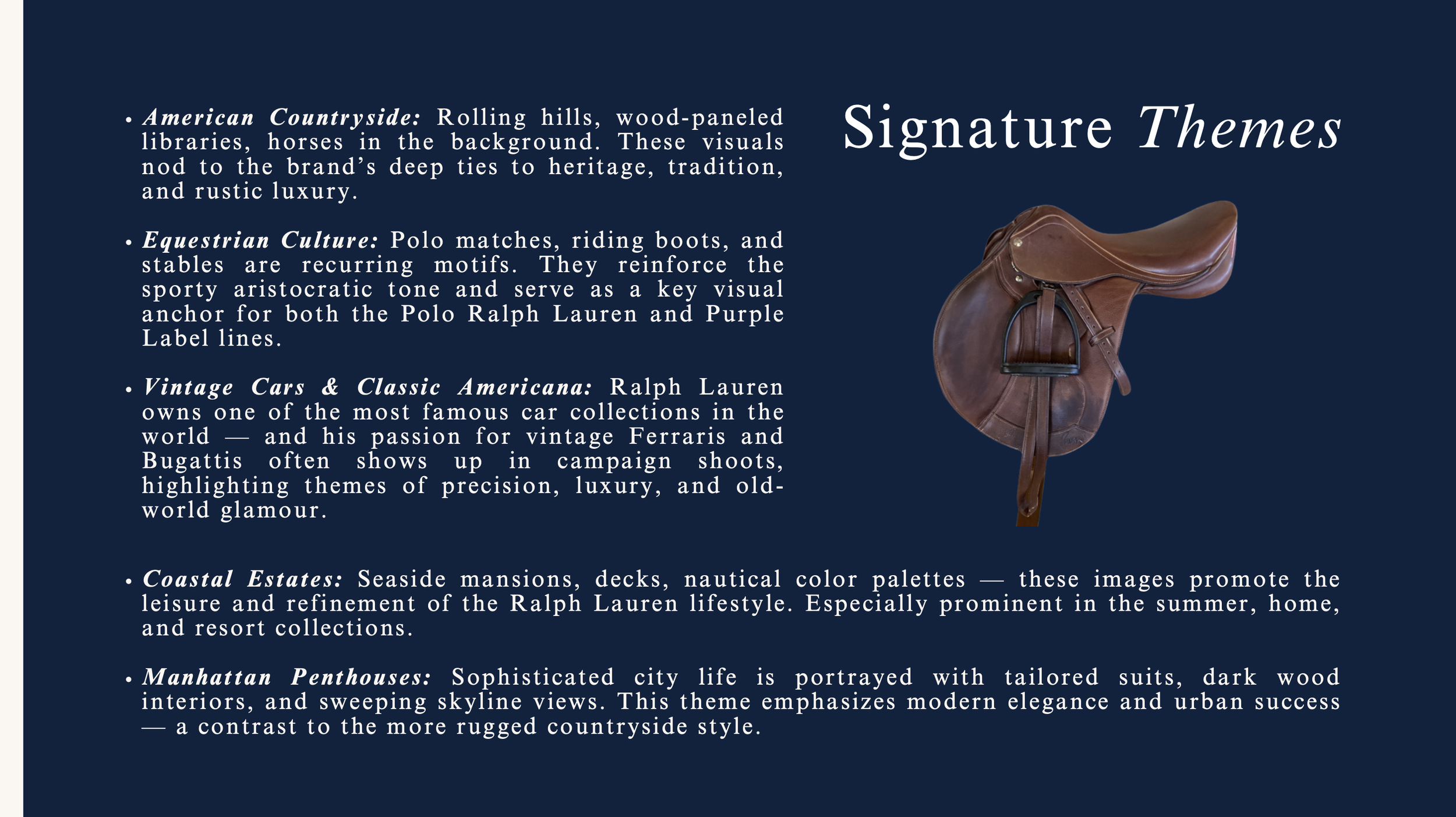
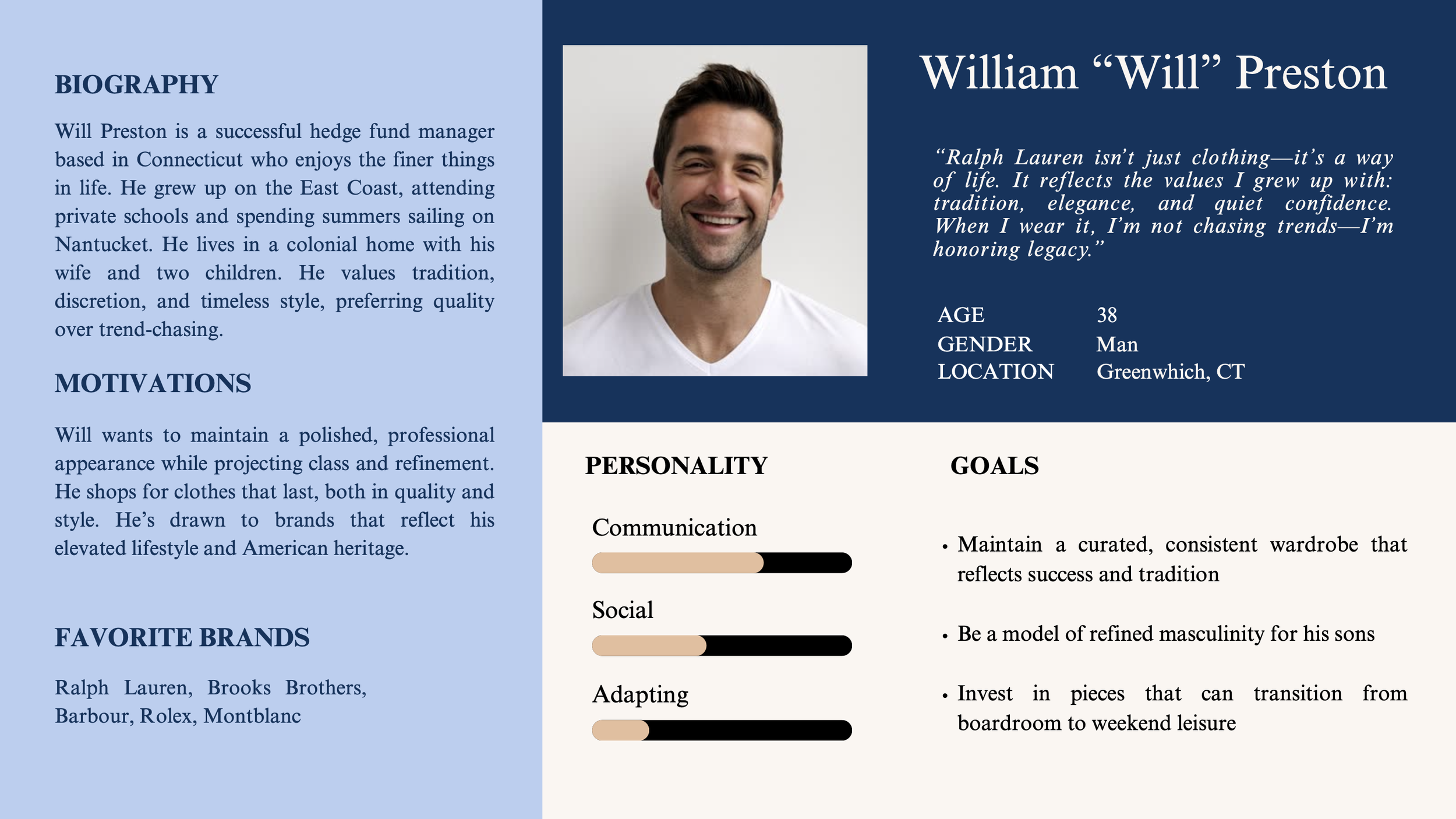
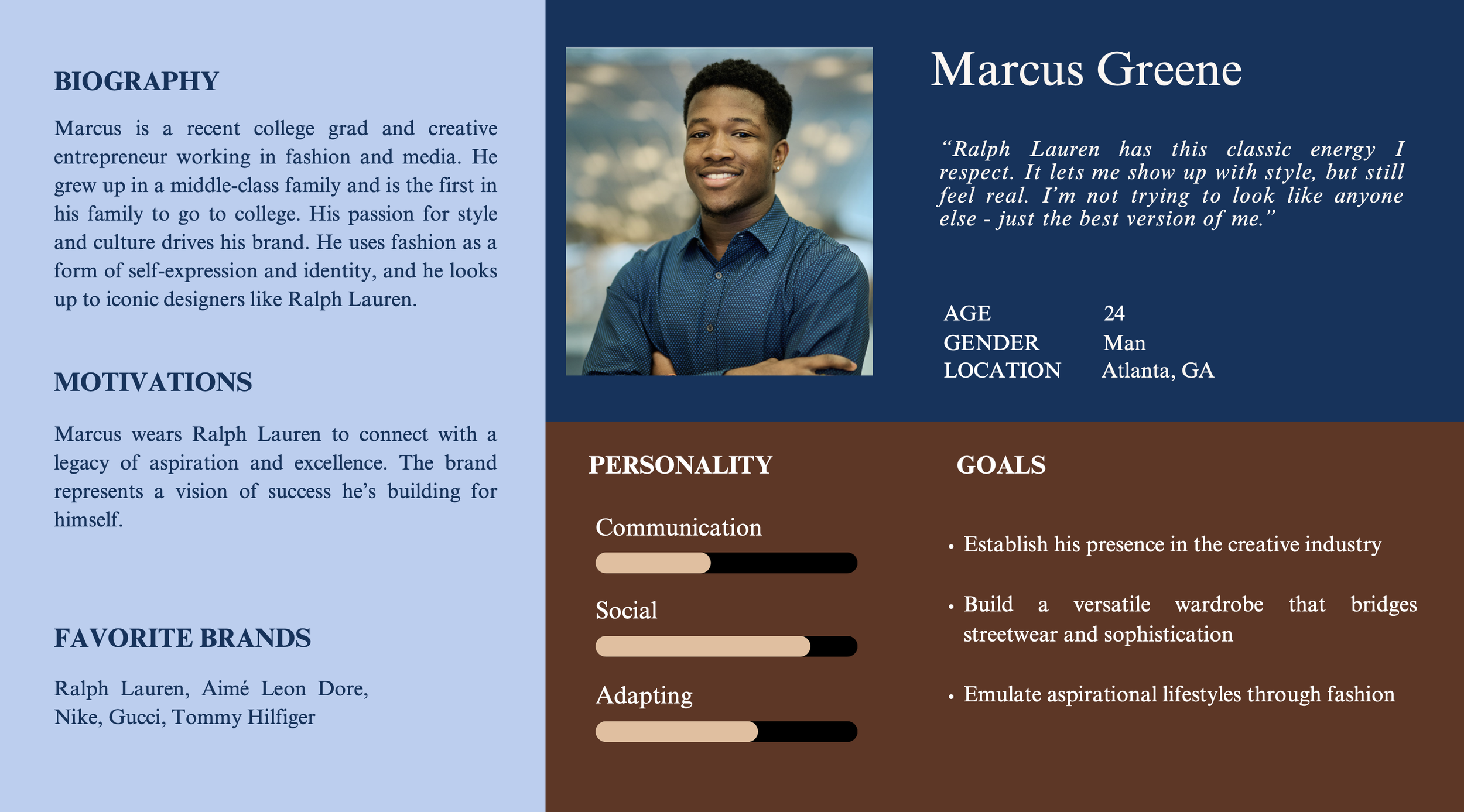
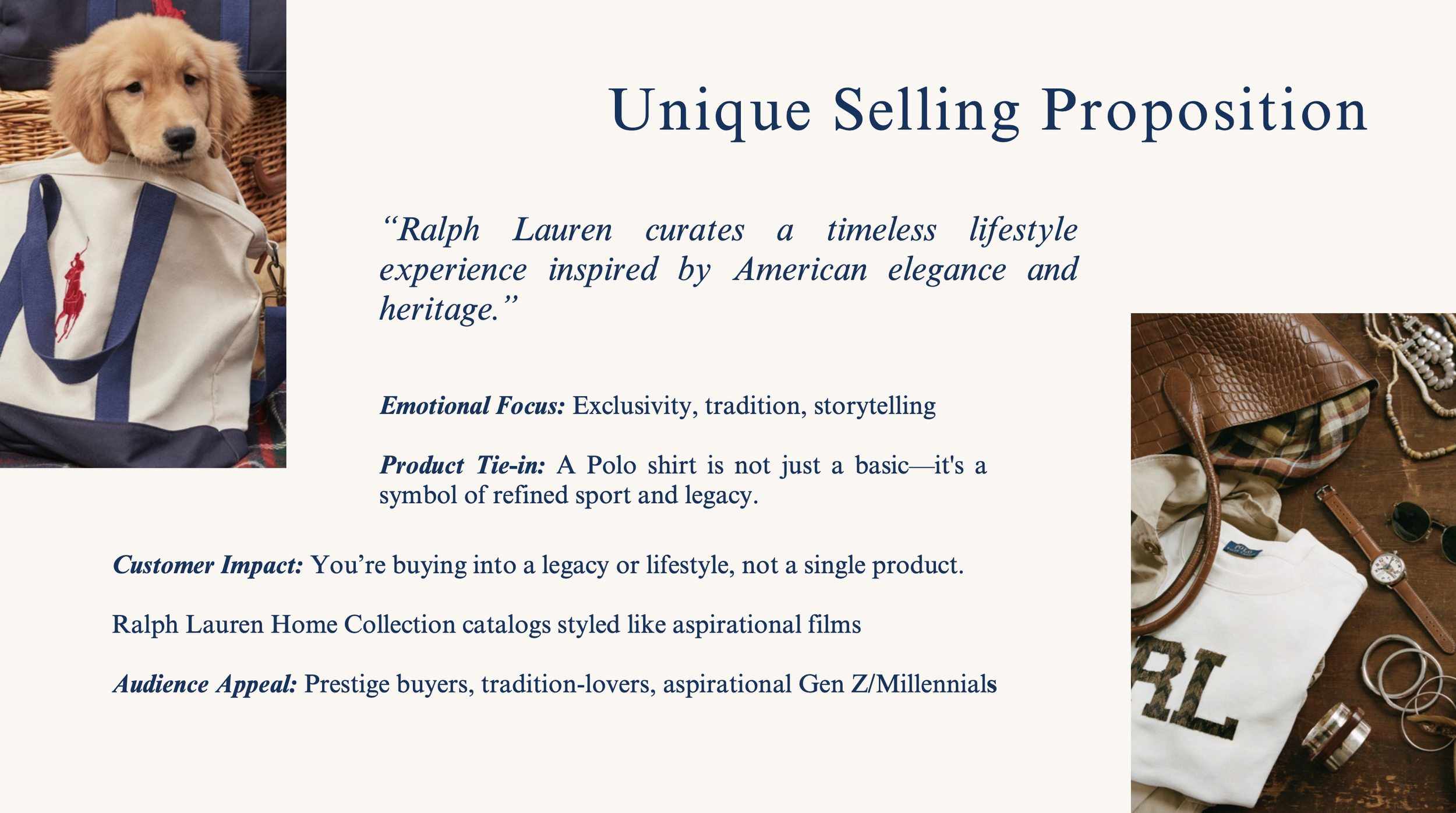
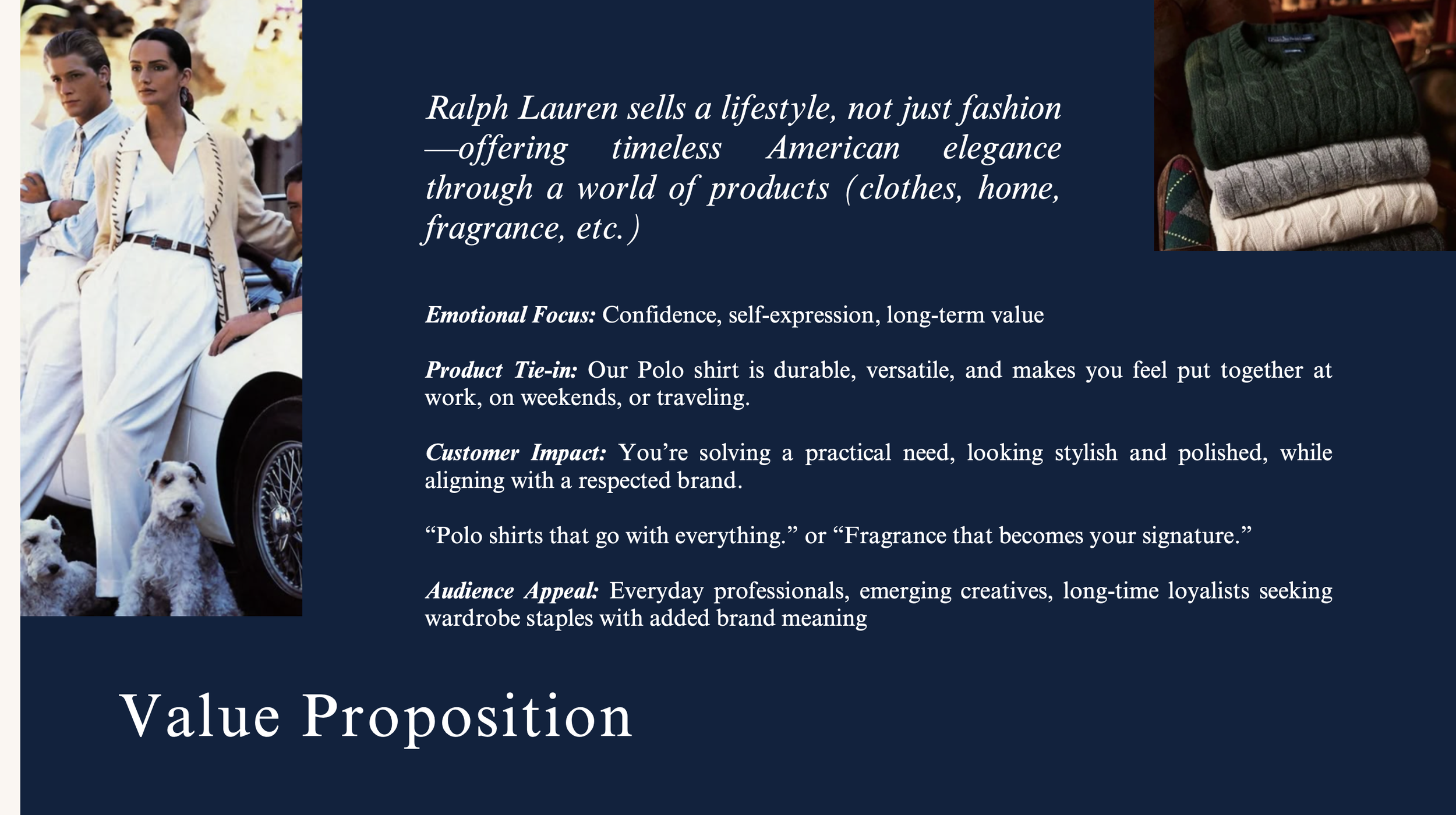
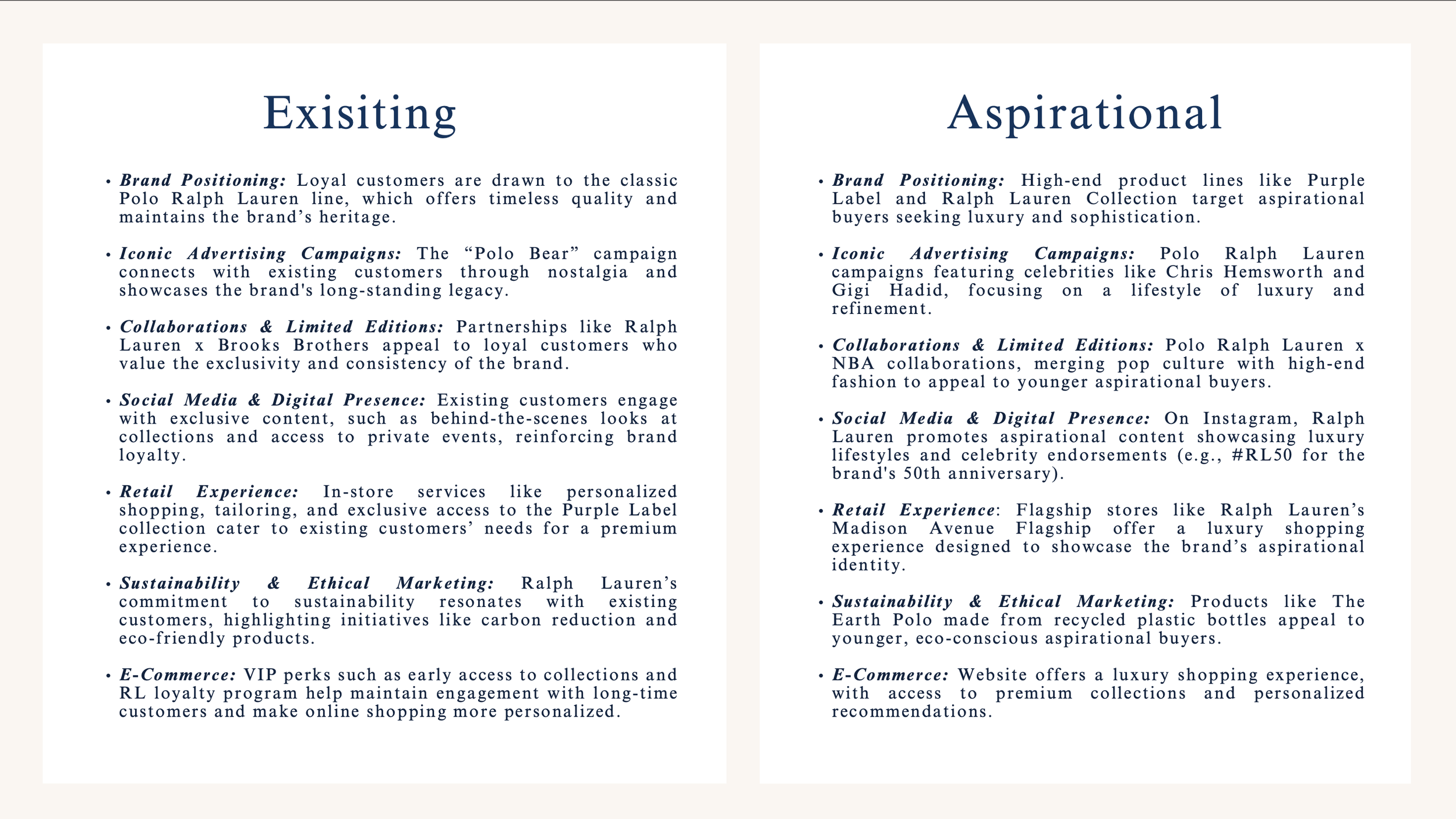
The project began with a deep dive into Ralph Lauren's brand architecture and history, tracing the company's milestones from its 1967 founding through its 1997 IPO, international expansion, and present-day challenges. I analyzed the brand's multi-tiered product structure, from the ultra-premium Purple Label to the accessible Polo Ralph Lauren mainline, and examined how Ralph Lauren has used lifestyle storytelling, visual consistency, and cultural associations with equestrianism, Ivy League prep, and Americana to maintain its position across decades. I also developed detailed customer personas to anchor the strategic analysis: William "Will" Preston, a 38-year-old hedge fund manager in Greenwich, Connecticut, representing the brand's affluent legacy consumer, and Olivia Chen, a 32-year-old tech marketing VP in San Francisco, representing the aspirational, modern professional the brand must increasingly attract.
Analysis, Strategy, and Growth
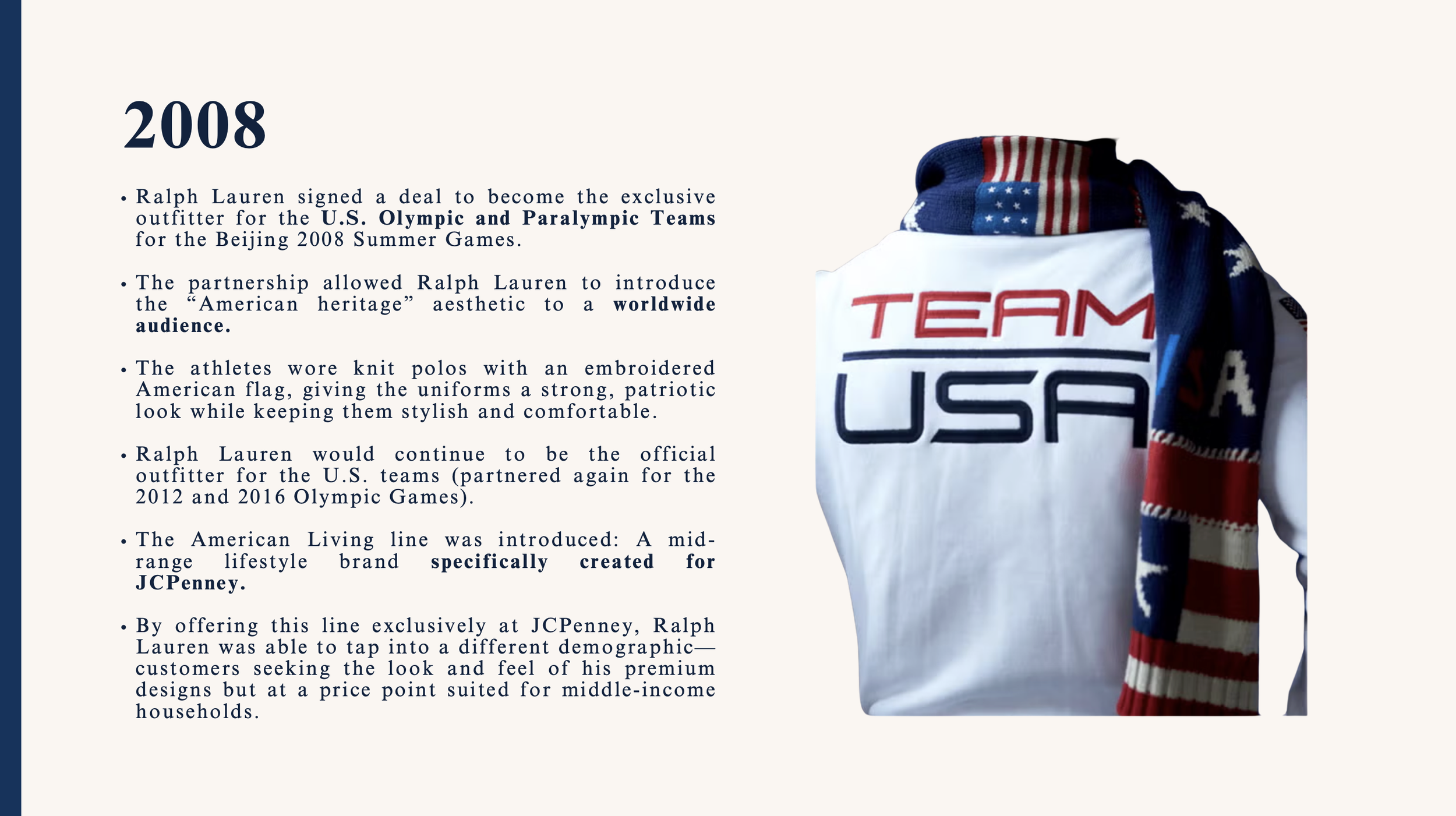
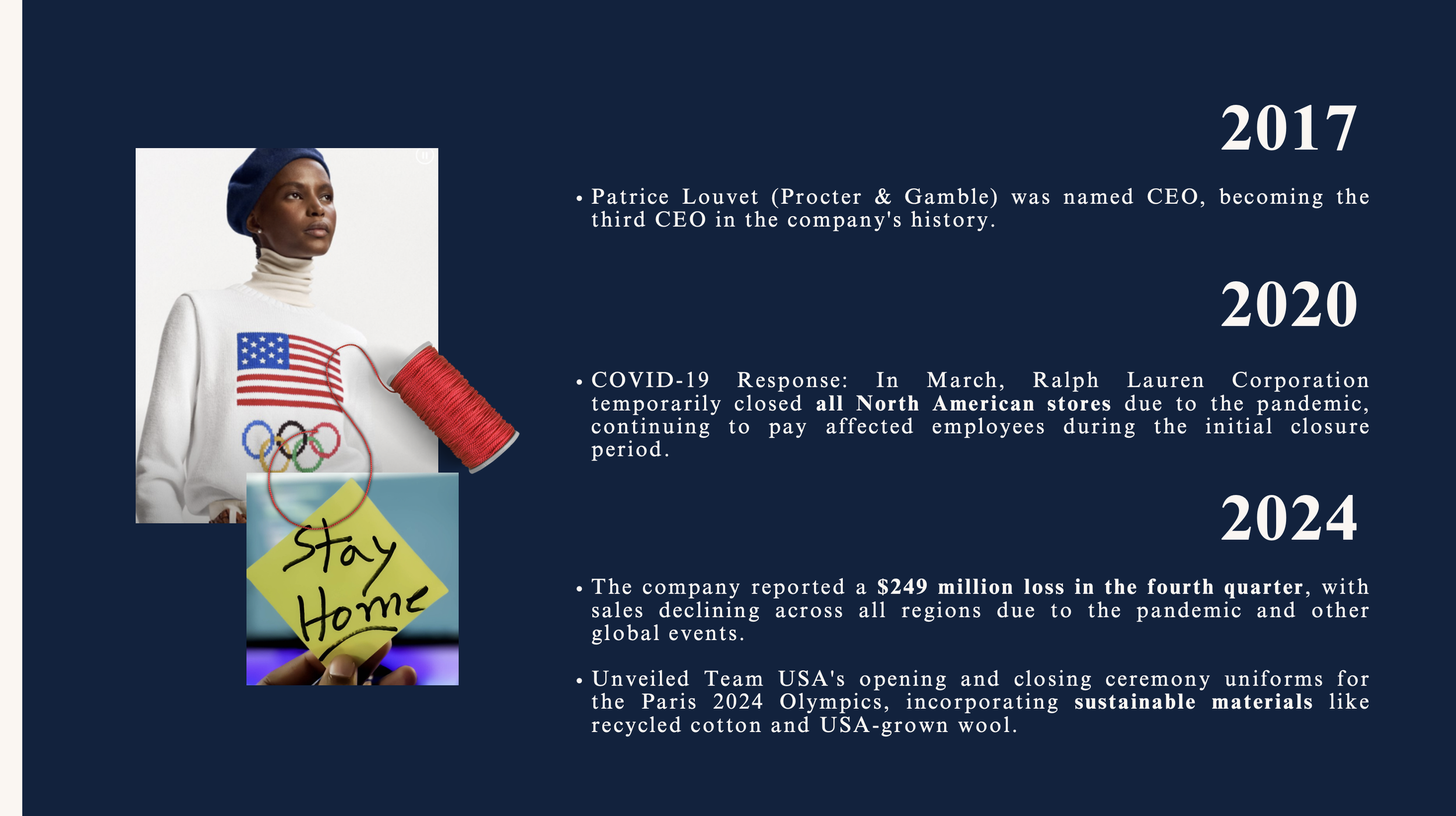
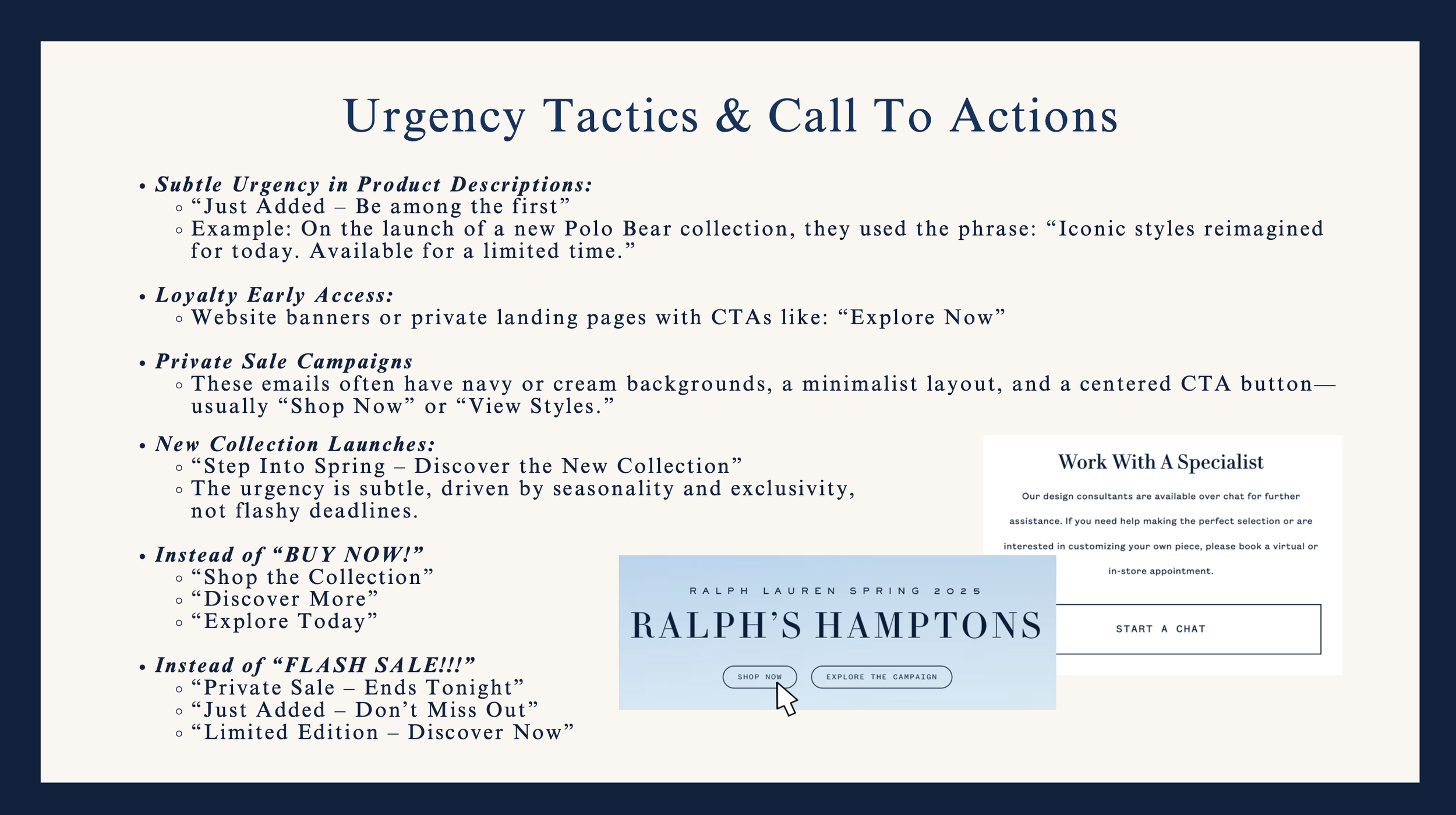
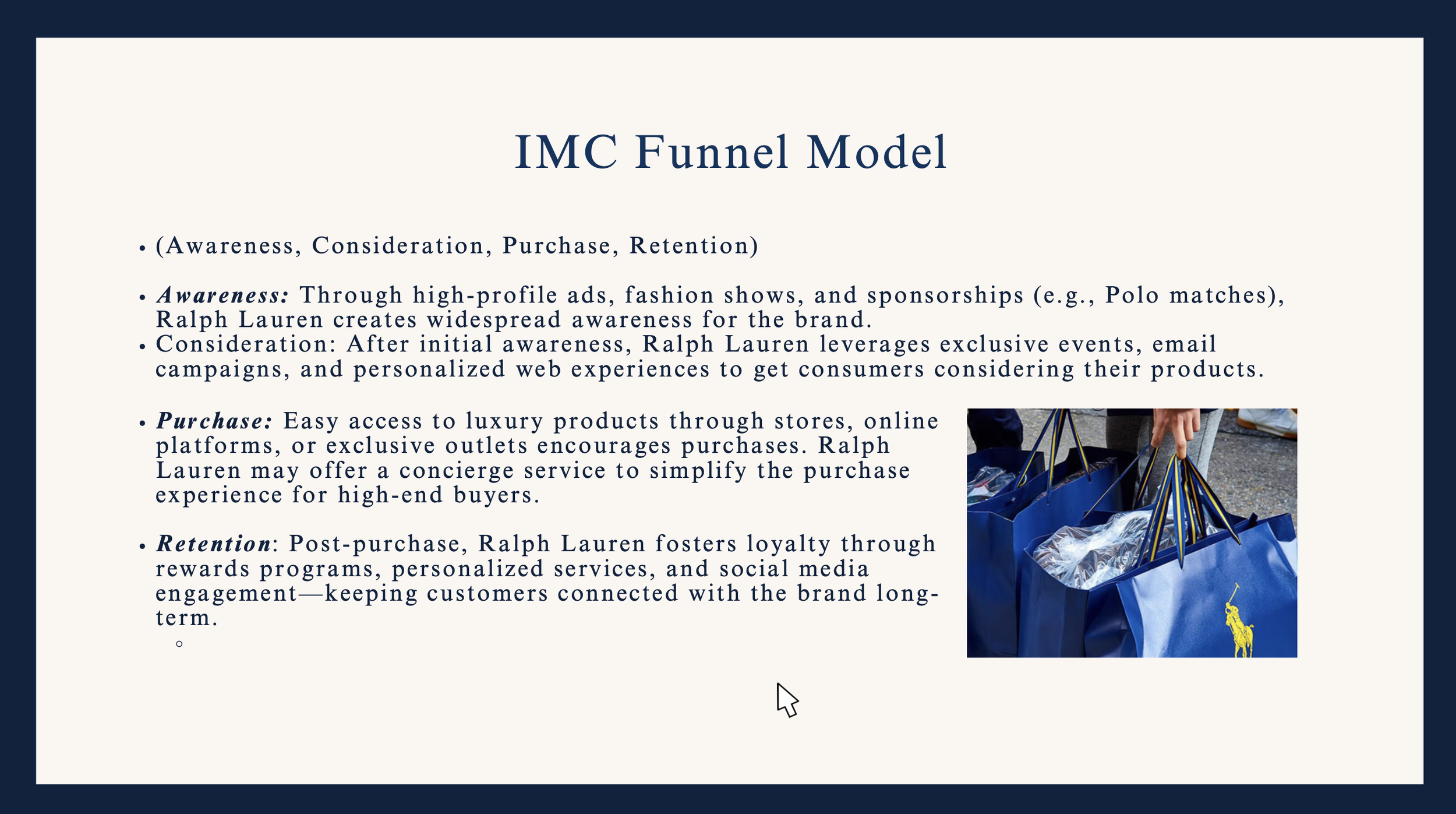
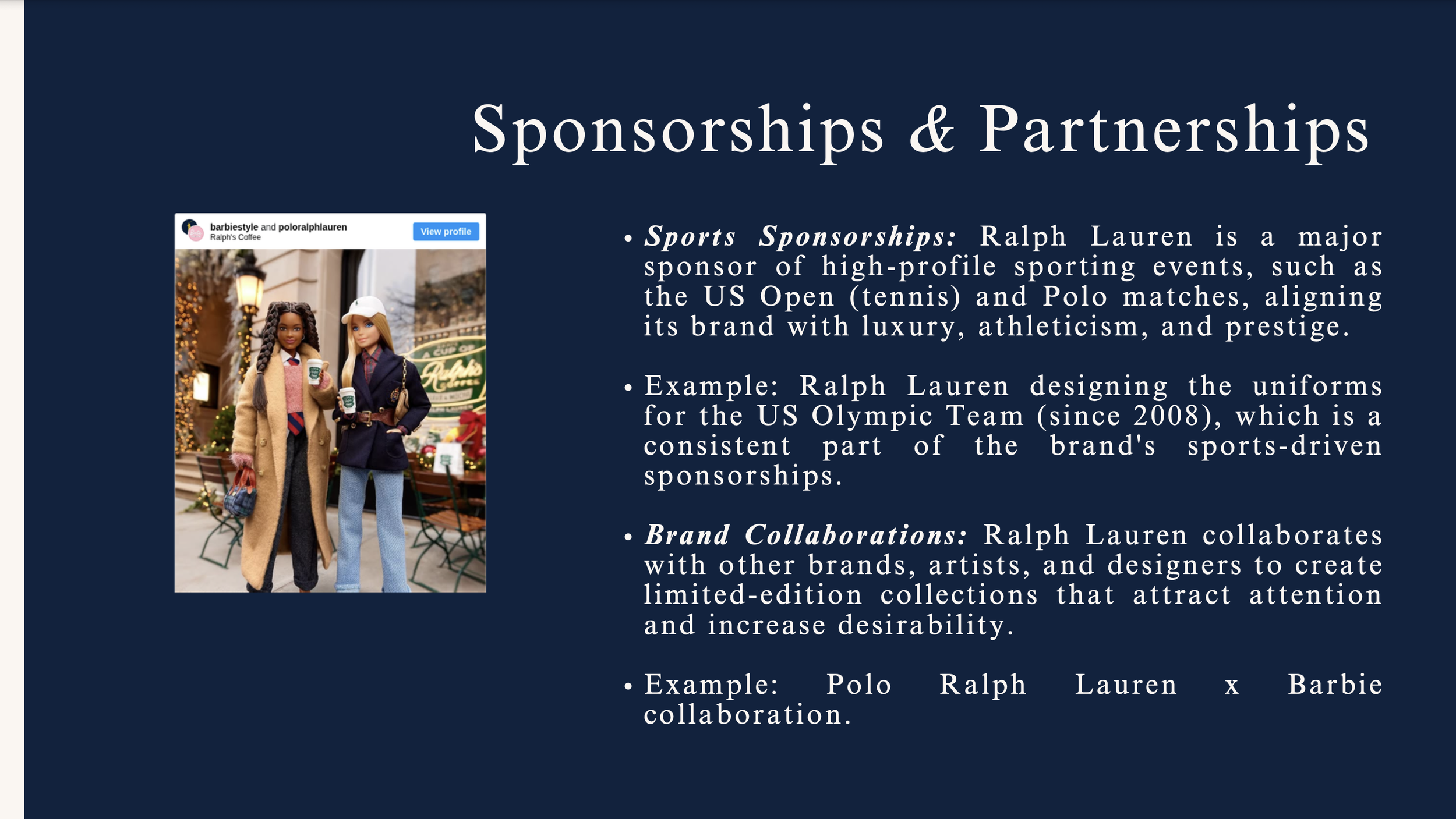
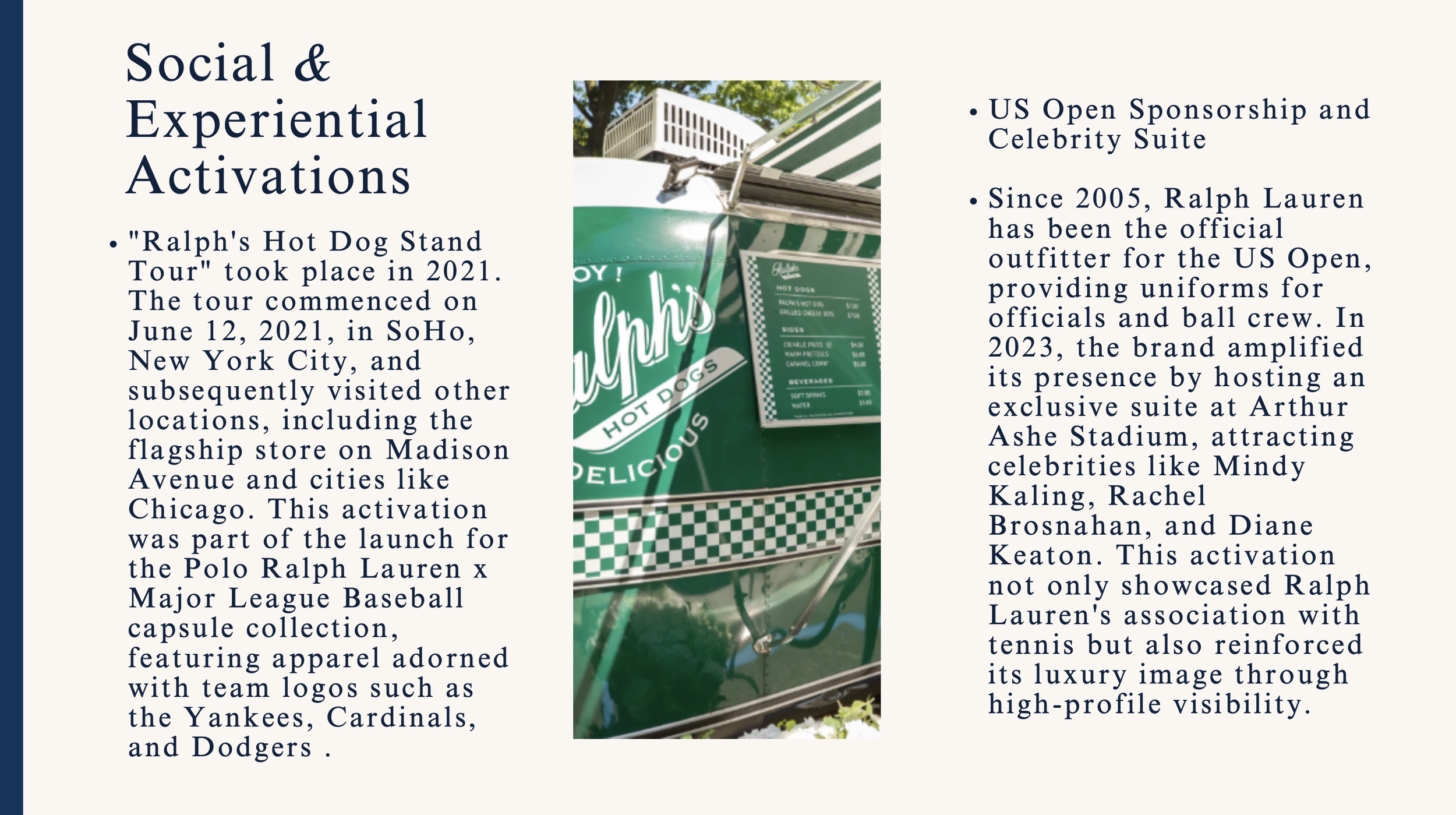
One of the most valuable aspects of this project was the depth of strategic thinking required to analyze a brand as complex and layered as Ralph Lauren. Rather than relying on a single data source, I synthesized information across the brand's corporate communications, press coverage, fashion industry reporting, and academic marketing frameworks to build out a thorough integrated marketing communications analysis. The IMC funnel I developed traced the customer journey through awareness, consideration, purchase, and retention, mapping how Ralph Lauren uses high-profile sponsorships like the US Open and Olympic outfitting partnerships, exclusive events, personalized digital campaigns, and loyalty programming to move consumers through each stage while maintaining an aura of quiet prestige.
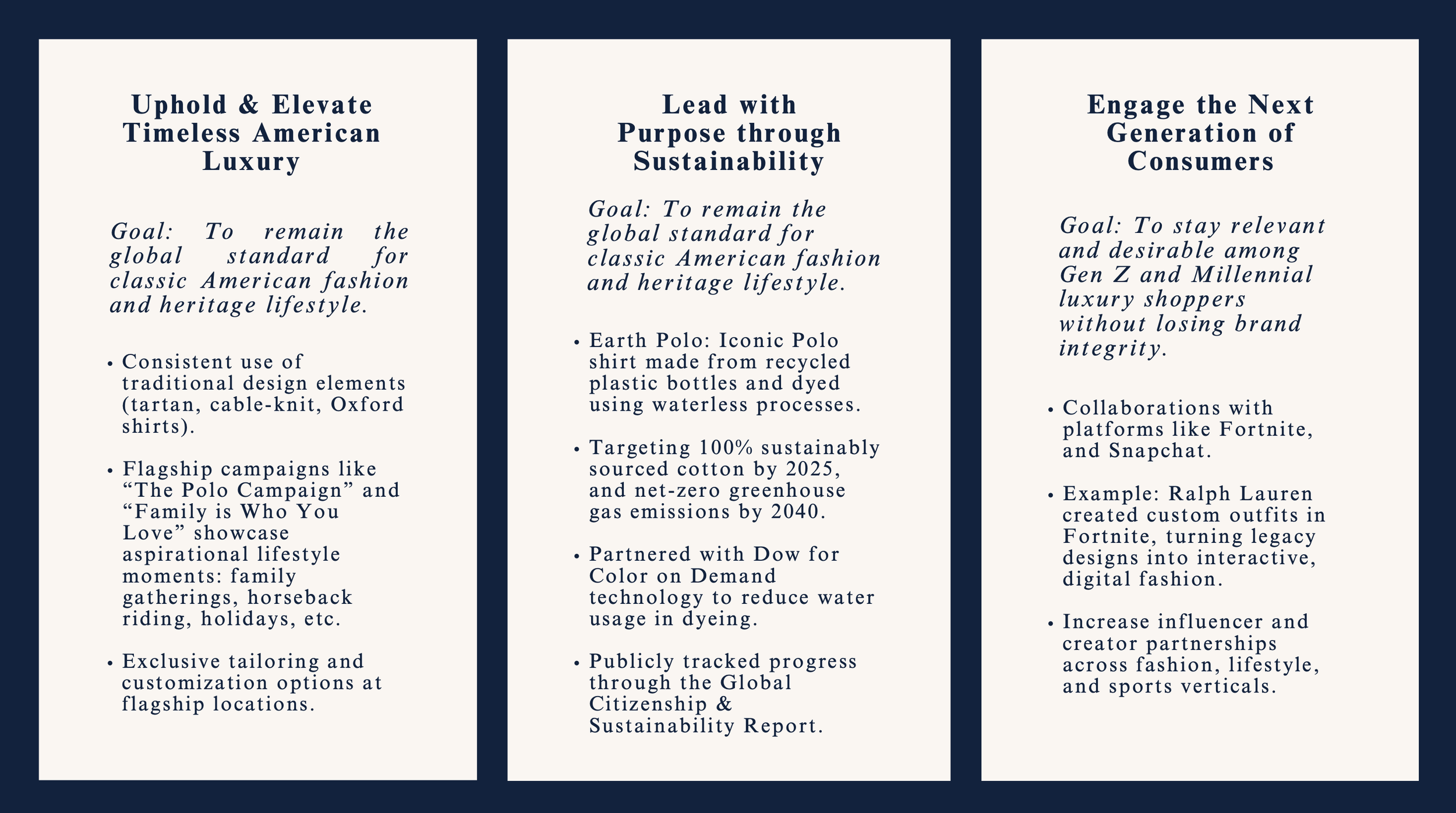
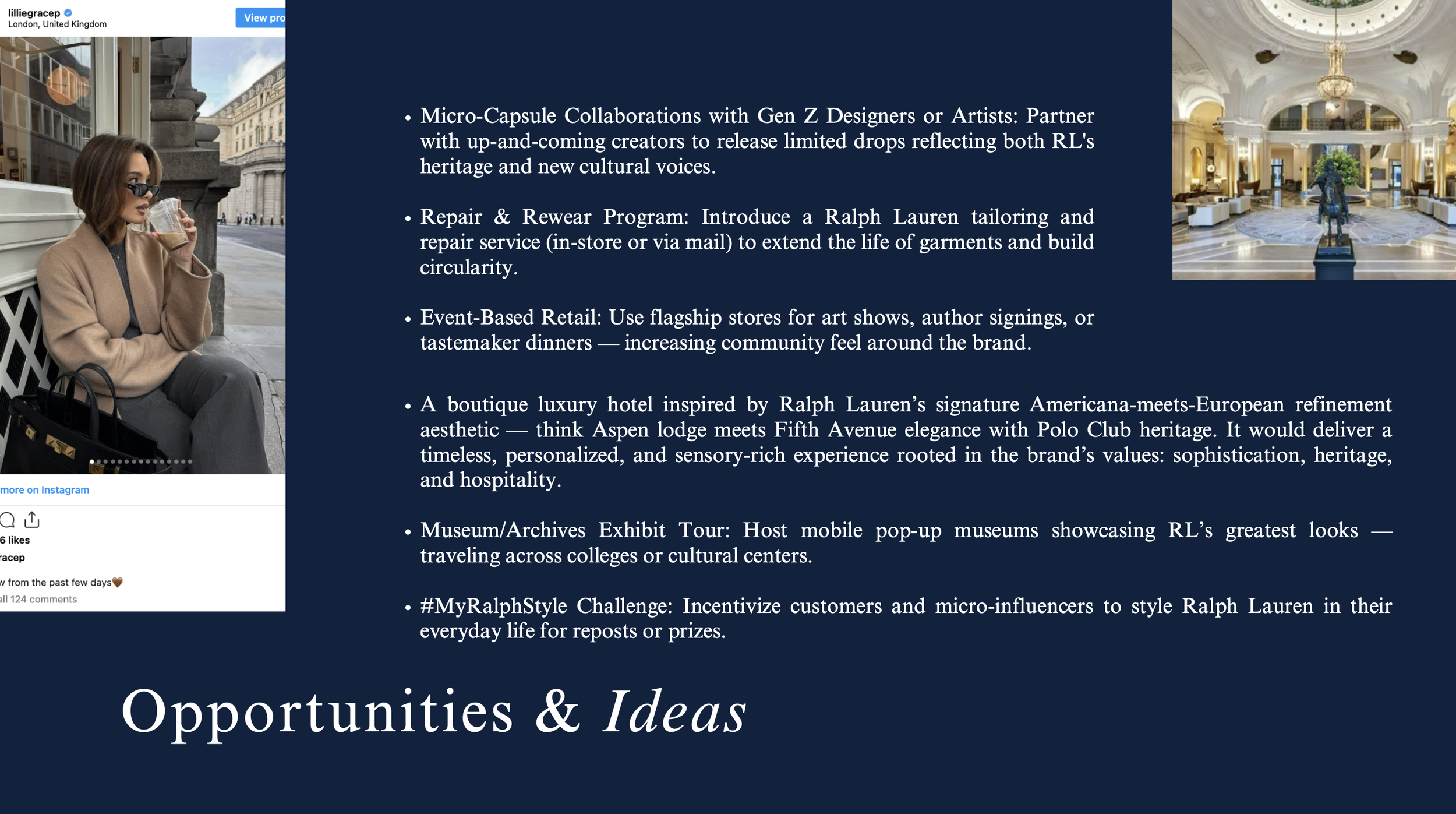
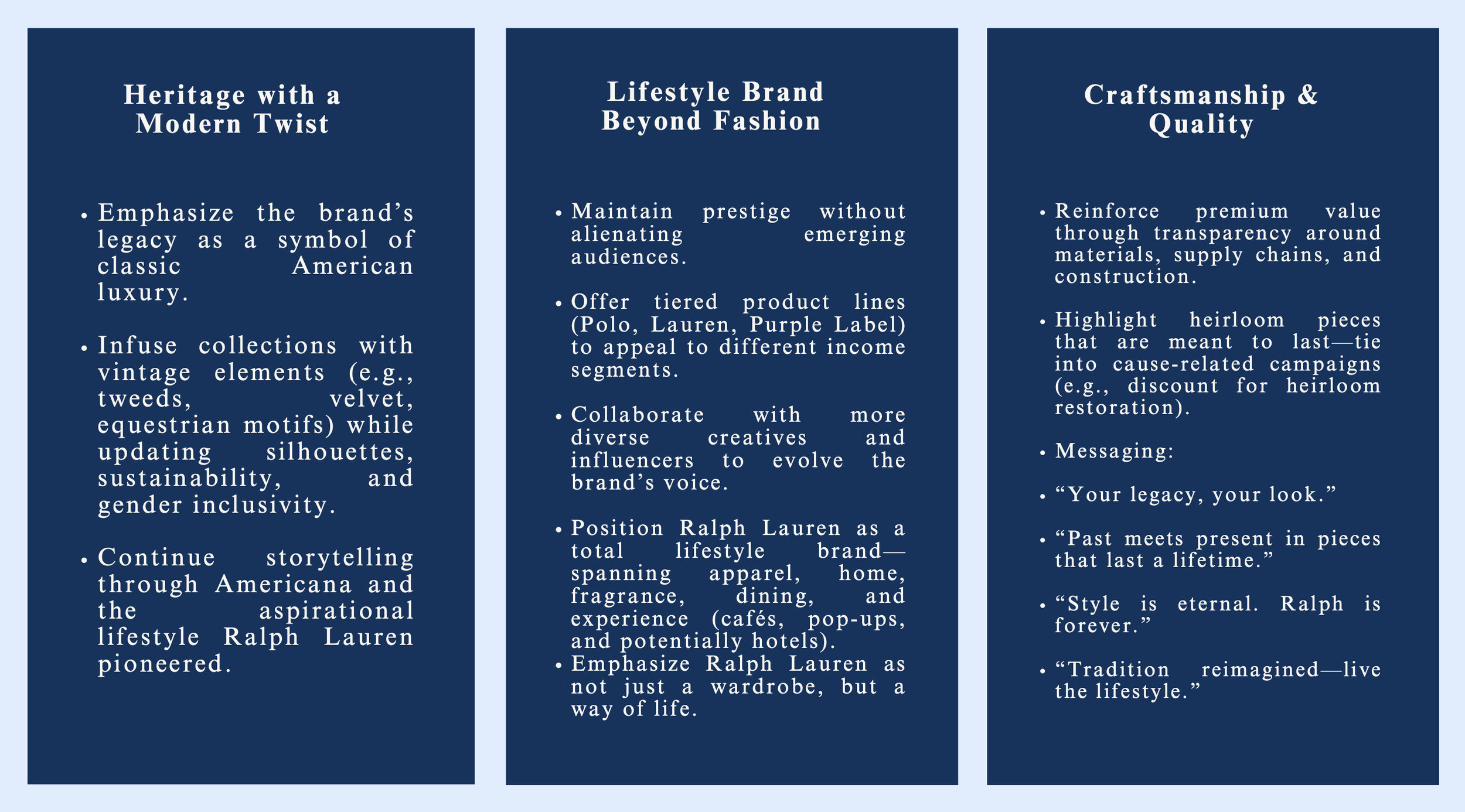
The project deepened my understanding of the unique challenges facing heritage luxury brands in a fragmented media landscape. Ralph Lauren competes not just with direct fashion rivals like Burberry, Lacoste, and Tommy Hilfiger, but also with fast-fashion disruptors like Aime Leon Dore that appeal to younger consumers through streetwear credibility and social media. Navigating that landscape required me to think carefully about how a brand maintains its aspirational equity without alienating an emerging customer base. The brand positioning section of my analysis explored three strategic pillars for Ralph Lauren going forward: heritage with a modern twist, lifestyle brand beyond fashion, and craftsmanship and quality, each supported by messaging concepts and channel-specific recommendations. The opportunities section pushed me to think creatively about how Ralph Lauren could extend its world through boutique hotels, museum archive pop-ups, Gen Z capsule collaborations, and a Repair and Rewear circularity program. Taken together, this case study gave me hands-on experience thinking like both a brand strategist and a marketing communications planner.